Music · Beginner
Play your first three songs on acoustic guitar
A step-by-step recorded programme that takes you from holding the instrument to strumming and singing complete songs at your own pace.
- 49 recorded video lessons
- 7 reviewed practice assignments
- Chord charts as PDFs
- Learn at your own pace
- 14-day money-back guarantee
Why most guitar starts stall in the first month
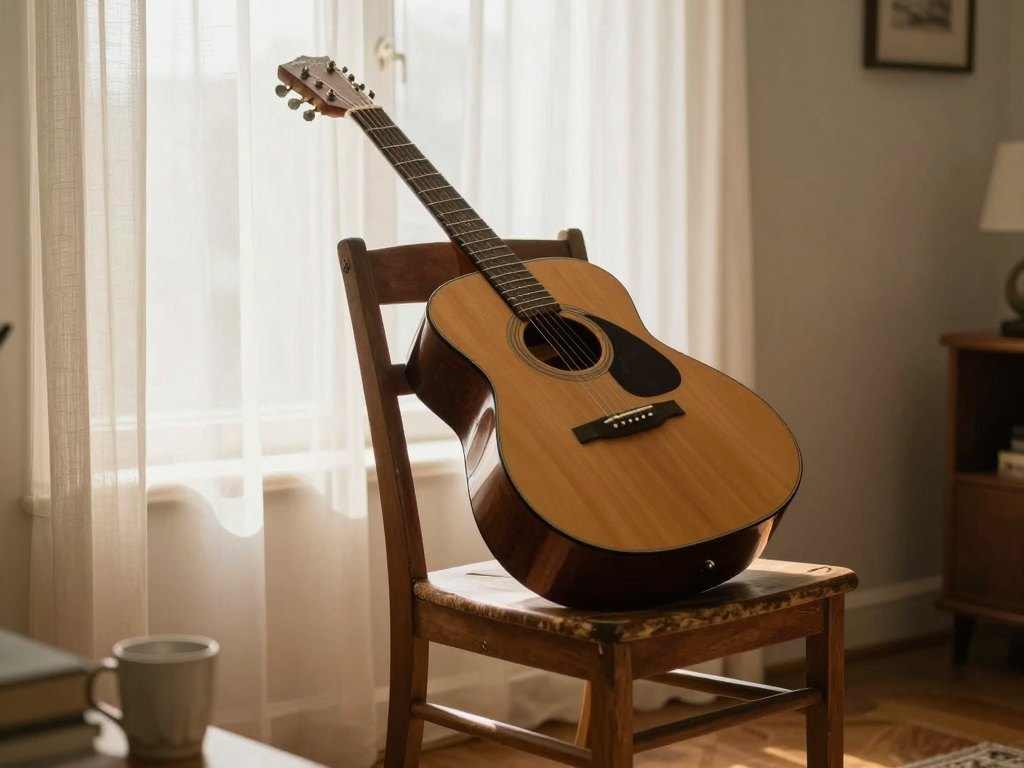
You have a guitar in the corner of the room. Maybe you bought it last year, maybe a friend lent it to you, and you have already worked out that the instrument itself is not the problem. The problem is that nothing tells you what to do first. One video says start with chords, another says start with scales, a third says your hand position is wrong before you have played a single note.
So the guitar stays in its case. When you do pick it up, your fingers hurt after ten minutes, the chords buzz, and switching between two shapes feels like a small physical impossibility. Nothing sounds like the songs you wanted to play, and there is no one to tell you whether you are making progress or quietly building a bad habit.
This course exists to remove that guesswork. It is a recorded beginner programme built around one fixed order of steps: how to sit and hold the instrument, how the right hand produces a clean sound, how the left hand forms its first shapes, how the two hands work together, and finally how to keep a rhythm going while you sing.
Every block ends with a practical assignment that is checked and returned with written comments, so you know what to correct before the next block opens. By the end, the aim is concrete: you can play and sing at least three songs from beginning to end, and you know how to learn the fourth one yourself.
What you will be able to do
Each point below is a skill the lessons build towards, in this order.
- Hold and tune the guitar correctly
Sit, position the instrument and bring it into tune without relying on someone else.
- Produce a clean sound with the right hand
Thumb and finger strokes, arpeggios and a steady pulse instead of a strum that muddles the strings.
- Form the basic open chords
The shapes that cover most beginner songs, with fingers placed so the strings ring instead of buzzing.
- Change chords without stopping the rhythm
Practise transitions in isolation, then inside a song so the beat never drops.
- Keep time with strumming patterns
Simple down-and-up patterns, accents and pauses that make an accompaniment sound musical.
- Sing while you play
Coordinate voice and hands by learning the vocal line and the accompaniment separately first.
- Play at least three songs end to end
Full arrangements built from two to six chords, prepared in the song workshop block.
- Learn a new song on your own
Read a chord chart, work out the pattern and plan your own practice sessions after the course ends.
- 49
- recorded video lessons
- 7
- reviewed assignments
- 8
- learning blocks
- 3+
- songs you can play
One method, one order, no detours
The programme follows a single teaching sequence that has been used with absolute beginners of every age, from young children to students in their seventies. It starts with sound rather than with chords: before your left hand has to do anything difficult, you learn how the right hand makes a string ring clearly and how to keep a pulse going.
Only then do the first chord shapes appear, and they appear in pairs. Two chords are introduced, practised against each other until the change is smooth, and then used in a short musical phrase. New chords are added the same way, so your fingers always have a job they have already half learned.
The third layer is the voice. Playing and singing at once is where most self-taught beginners give up, because the two rhythms fight each other. The course separates them deliberately: the vocal line is learned on its own, the accompaniment is learned on its own, and only then are they joined, slowly, in a way that most people can follow.
Nothing in the sequence depends on talent or a natural ear. It depends on doing small things in the right order and repeating them often enough, which is exactly what a recorded course is good at.
How the course works
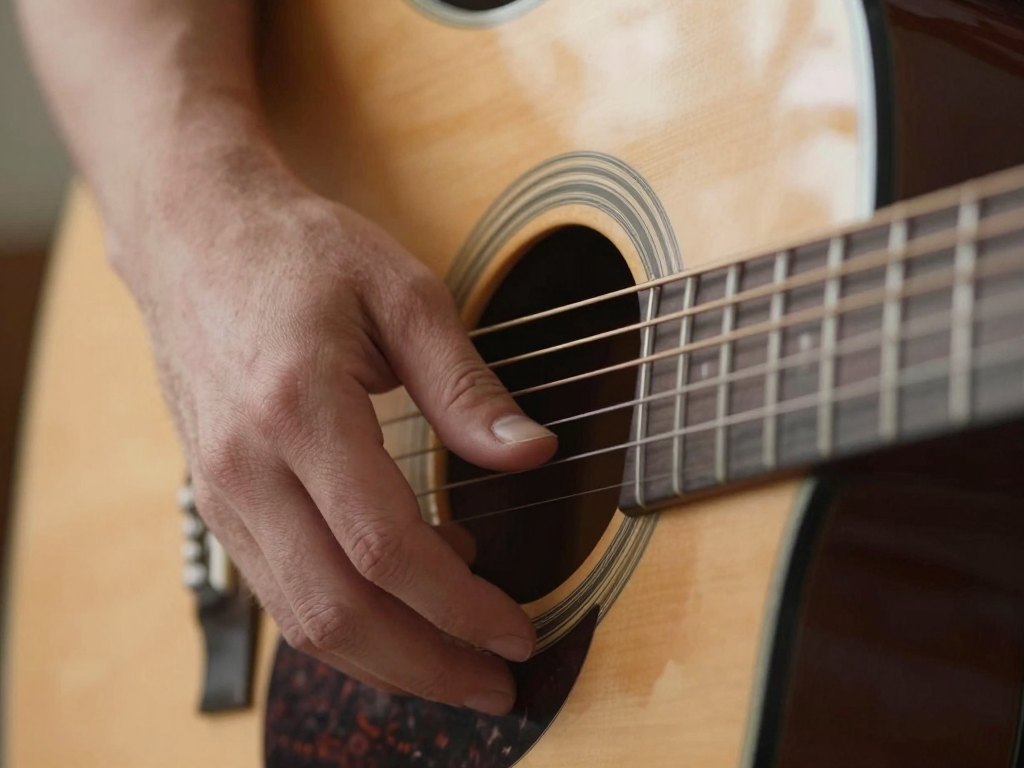
All lessons are pre-recorded videos that you watch on your own schedule and rewatch as often as you like. Nothing is live, so there is no fixed class time and no risk of falling behind a group. A realistic pace is three to four short sessions a week of fifteen to twenty minutes, though the course works equally well in longer weekend sittings.
The material is organised into eight blocks. Each block contains several short video lessons followed by one practical assignment: a short recording of your hands, a chord change, a strumming pattern or a song fragment. The assignment is checked against clear criteria and returned with written comments pointing out what to fix, whether that is a muted string, a rushed change or an unsteady beat.
Assignments also act as the gate to the next block. You cannot skip ahead to the songs before the fundamentals are in place, which is a deliberate design choice: it keeps your hands and your expectations moving at the same speed. If you already play a little, the early blocks will go quickly and you will reach the song workshop sooner.
Alongside the videos you get chord charts and song sheets as PDF files, so you can practise away from the screen with a printed page on the music stand in front of you.
The programme
The course's 49 recorded lessons are grouped into eight blocks. Each block lists its core lessons; a few short supplementary clips sit inside the blocks as well, and every block closes with one reviewed assignment.
1Block 1 — First contact with the instrumentGet comfortable with the guitar, tune it and make your first clean notes.6 lessons
- How the guitar is built: body, neck, frets and strings
- Sitting position and the three points of contact
- Tuning the open strings by ear and with a tuner
- Your first single notes on the first string
- Reading a chord diagram and a simple tab line
- Assignment: clean notes and a tuning check
2Block 2 — The right hand: sound before chordsLearn how the hand that makes the sound actually works.6 lessons
- Thumb stroke and finger stroke on open strings
- Alternating fingers for an even, repeating note
- Your first arpeggio pattern across three strings
- Keeping a steady pulse with a metronome
- Soft, medium and firm attack: controlling volume
- Assignment: a short arpeggio study on video
3Block 3 — Your first chord shapesTwo chords at a time, placed so every string rings.6 lessons
- Finger placement: why the buzz happens and how to stop it
- Your first minor chord, string by string
- Your first major chord and the change between the two
- Adding a third chord to the set
- Checking each string inside a chord
- Assignment: three chords, clean and in sequence
4Block 4 — Changing chords without stoppingTurn slow, careful shapes into smooth transitions in time.6 lessons
- The pivot finger: the shortest route between two shapes
- Practising a change in isolation before using it
- Changing on the beat instead of between beats
- Common beginner shapes and their shortcuts
- A four-chord loop played at a slow tempo
- Assignment: a four-chord loop recorded at tempo
5Block 5 — Strumming patterns and rhythmMake the accompaniment sound like music, not like effort.6 lessons
- Down strokes, up strokes and the wrist that drives them
- The basic down-up pattern and its accents
- Muting and the percussive strum
- Three patterns you can use in dozens of songs
- Playing a pattern over a chord change
- Assignment: one pattern over a full chord loop
6Block 6 — Singing and playing at the same timeSeparate the two rhythms, then join them without losing the beat.6 lessons
- Why the two rhythms fight, and the order that fixes it
- Learning the vocal line without the guitar
- Speaking the lyrics over the strumming pattern
- Joining voice and hands at half speed
- Breathing and phrasing while you accompany yourself
- Assignment: one verse sung and played together
7Block 7 — Song workshop: your first three songsFull arrangements of three beginner songs, built from what you already know.6 lessons
- Reading a song sheet: chords, structure and repeats
- Song one: a two-chord arrangement from start to finish
- Song two: adding a third chord and a new pattern
- Song three: a fuller progression with a sung chorus
- Fixing the one bar that always goes wrong
- Assignment: one song performed end to end
8Block 8 — Playing for other peopleConsolidate, polish and plan what comes next.6 lessons
- Warming up in five minutes before you play
- Playing through mistakes instead of restarting
- Building a small set of songs you can perform
- Learning a new song from a chord chart on your own
- Planning a weekly practice routine that fits your life
- Assignment: a short performance of your chosen song
What you get
Everything below is delivered digitally and stays with you after purchase.
- 49 recorded video lessons
Short, focused demonstrations you can pause, slow down and rewatch as often as you need.
- 7 reviewed practice assignments
Each one is checked against clear criteria and returned with written comments on what to correct.
- Chord charts as PDF files
Printable diagrams of every shape used in the course, for practice away from the screen.
- Song sheets for the workshop
Chord progressions, structure and lyrics laid out for the three songs you learn to play.
- A fixed learning sequence
Blocks unlock in order, so you always know what to practise next and when to move on.
- Self-paced access
No class times and no deadlines: study in the morning, at night or in weekend sittings.
- A practice plan for afterwards
A weekly routine you can keep using once the lessons are finished.
- 14-day money-back guarantee
If the method is not for you, request a refund within two weeks of purchase.
Twenty minutes is enough to make progress
Guitar is a physical skill, and physical skills respond better to short, frequent sessions than to one long weekly push. The course is built around that reality: each video is short enough to watch once and then practise immediately, and each practice session has a single clear target rather than a list of things to get through.
That is also why the assignments matter more than they might seem to. Recording yourself playing a chord change or a strumming pattern shows you things you cannot hear while you are doing it: a string that never rings, a change that arrives half a beat late, a wrist that stiffens as soon as the tempo rises. Written comments on that recording give you a correction to work on instead of a vague feeling that something is off.
If life gets in the way for a week or two, nothing expires and nothing is lost. You return to the block you were on and continue from there.
Is this course for you?
This course is for you if…
- Complete beginners who have never played a stringed instrument
- People who bought a guitar and never found a sensible starting point
- Self-taught players who can form a few chords but cannot keep time or sing while playing
- Anyone who prefers to learn at home, at their own pace, without a fixed class schedule
- Parents looking for a structured beginner programme an older child can follow with guidance
Probably not a fit if…
- Intermediate or advanced players looking for lead guitar, improvisation or music theory in depth
- Anyone hoping for live lessons, one-to-one coaching or a fixed group schedule — the course is fully recorded
- Electric guitar players focused on distortion, amps and effects: the material is written for acoustic playing
- People who want to read sheet music fluently; the course works from chord diagrams and song sheets
After the course
By the final block you are no longer a person with a guitar in the corner. You have a small repertoire: at least three songs you can play and sing from beginning to end, plus the chord vocabulary to attempt many more. You can tune the instrument yourself, sit down and produce a clean sound on purpose rather than by accident.
More useful than the songs is the routine. You know how to break a new piece into a chord change, a strumming pattern and a vocal line, practise each part separately and then put them together. That is the skill that keeps a beginner playing after a course ends, and it is the one the assignments are designed to build.
Some students stop at the three songs and play them for friends and family. Others carry on into fingerstyle, singing with a band or writing their own material. Either way, the foundation is the same: clean sound, steady time, and hands that know where they are going.
Questions before you buy
How much time do I need each week?
Three or four sessions of fifteen to twenty minutes a week is enough to keep moving. The lessons are short by design, and each one gives you a single thing to practise rather than a long list. If you have more time, you will simply move through the blocks faster.
Do I need any experience or music theory?
None. The course assumes you have never held a guitar. Everything is explained from the beginning: how the instrument is built, how to sit, how to tune it, how to read a chord diagram. No sheet music reading is required at any point.
What instrument do I need?
A playable acoustic guitar with six strings, ideally freshly strung, plus a pick if you have one and a tuner or tuner app. A classical nylon-string guitar works just as well as a steel-string acoustic for every exercise in the course.
How do I get access after paying?
Access is opened for you immediately after the payment is confirmed, and you receive the details by email. You then work through the blocks in your own account: watch a lesson, practise, submit the block's assignment, and the next block opens once it has been reviewed.
What do the lessons actually look like?
Each lesson is a short recorded video in which the technique is demonstrated close up on the instrument and explained step by step. You can pause, rewind and rewatch any part. Chord charts and song sheets are supplied as PDF files you can print.
How are the assignments checked?
You record the requested exercise — a chord change, a strumming pattern, a song fragment — and submit it with the assignment. It is checked against the criteria stated in the lesson and returned with written comments on what to correct before you move on.
How long does the material stay available?
The lessons and PDFs remain available to you after purchase, so you can return to any block later, rewatch a demonstration or use the song sheets as a reference. There is no deadline by which you have to finish.
What is the refund policy?
You have 14 days from purchase to request a refund. If the teaching style or the pace does not suit you, contact support within that period and the payment is returned. No explanation is required beyond the request itself.
I already play a little. Will this be too slow?
The first blocks will move quickly for you, and you can work through them at your own speed. The later blocks on rhythm, singing while playing and the song workshop are where most self-taught players find the real gaps, so the course is still likely to be useful.
Start with the first block this week
Forty-nine lessons, seven reviewed assignments and a small repertoire of songs — all at your own pace, with 14 days to change your mind.