Education · All levels
Run movement sessions that meet each child where they are
A recorded practicum in sensory integration and adaptive physical education, from your first session to a small gym of your own.
- 6 modules, 24 recorded lessons
- Session plans and observation sheets
- Equipment lists for three budgets
- 60 days of access
- 14-day money-back guarantee
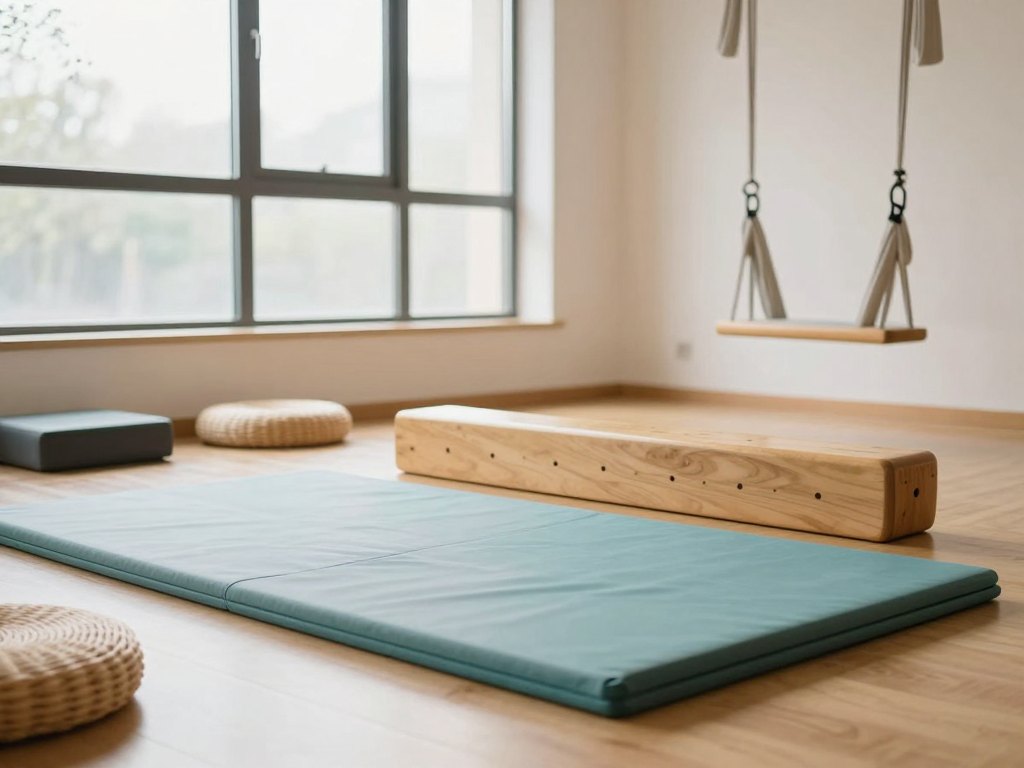
Why good movement work is harder than it looks
You have probably tried the obvious things first. A ball, a mat, a few exercises copied from a video — and a child who walks away, melts down, or simply does something different from what you planned. Working with children whose movement and sensory processing develop at their own pace is not a matter of knowing more exercises. It is a matter of knowing what to do in the first five minutes, and what to do when the plan stops working.
Specialists often arrive here from two directions. Some have a teaching or sports background and find that group methods do not transfer to a child who cannot yet copy a movement or tolerate a busy room. Others are parents who have spent years in waiting rooms and want to do something concrete at home, between appointments, without turning the living room into a clinic.
This practicum was built for both. It sets out a working method for adaptive physical education and sensory integration: how to observe a child, how to prepare a room, how to build a session that succeeds, and how to progress when it does. The lessons are recorded, so you can watch a block, try it in your next session, and come back to the same explanation a week later.
It is also honest about scope. Movement work supports participation, confidence and regulation; it does not replace medical care, diagnosis or therapy prescribed by a clinician. What it does is give you a structured, repeatable way to spend the time you already have with a child.
What you will be able to do
Each of these is a skill you practise during the programme, not just a topic you read about.
- Observe a child's movement before you plan
Note tone, balance, coordination and response to sensory input, and use those notes to choose goals.
- Build a session with a clear beginning, middle and end
A warm-up, main block and cool-down that a child can predict and follow.
- Adapt one exercise for three different children
Change the equipment, the distance or the level of support instead of changing the whole plan.
- Regulate before you teach
Recognise overload early and use movement and environment to settle a child before asking for a task.
- Choose equipment that fits your space and budget
Three equipment plans, from a corner of a room to a full gym.
- Track progress with simple observation sheets
Record what changed in a form you can share with parents and colleagues.
- Set up a small practice of your own
Plan your space, your weekly schedule and how you explain your work to parents.
- Work confidently with parents
Explain what you are doing and why, and agree on what happens between sessions.
- 6
- modules
- 24
- recorded lessons
- 3
- equipment plans
- 60
- days of access
The method: observe, regulate, then move
Most failed sessions fail before the first exercise. A child arrives already overloaded by noise, transitions or an unfamiliar room, and no amount of encouragement will produce a clean movement. The method taught here reverses the usual order: you observe first, regulate second, and only then ask for movement that has a goal.
Observation is concrete. In the lessons you work through a short checklist — how the child sits, how they carry weight through their arms, how they react to swinging or spinning input, how quickly they recover from a stumble. Those observations decide which of the session templates you use and which equipment you bring out first.
Regulation is the part most beginners skip. Before a task, you give the child input that organises the body: heavy work, pushing, pulling, slow swinging, deep pressure through a mat. Only when the child is settled do you introduce the skill you actually came to practise — stepping, jumping, catching, balancing, following a two-step instruction.
The third element is progression. Every exercise in the programme has three versions: supported, independent and combined. A child moves up when they succeed twice in a row, not when the calendar says so. This is slow by design, and it is the reason the approach holds up in real rooms with real children.

How the course works
The practicum is a self-paced recorded programme. You get 24 video lessons arranged in six modules, each lesson short enough to watch before a session and return to afterwards. There are no live calls and no fixed schedule: you start when you pay and work through the modules in the order that suits you.
Alongside the videos you get the working documents — a session plan template, an observation sheet, an equipment checklist for each of the three budgets, and a one-page summary of the method you can keep on the wall of your space. The assignments ask you to film nothing and share nothing; you try a block with a child or with a colleague and note what happened.
Access runs for 60 days from the date of payment. That is enough to watch everything twice and to run at least eight practice sessions, which is where the learning actually happens. Worksheets and checklists can be downloaded and kept after access ends.
The material is written for two readers at once. If you are starting out, follow the modules in order and treat the first three as your foundation. If you already work with children, the equipment module and the module on building a practice will give you the most immediate return, and the session templates are worth comparing against what you do now.
The programme
Six modules, 24 lessons. Work through them in order, or start with the module that matches the problem in front of you.
1Module 1 — Foundations of adaptive movementWhat movement work can do, and how to see what a child is doing.4 lessons
- What adaptive physical education can and cannot do
- How movement develops: tone, balance, coordination and planning
- Reading a child's movement profile before you plan a session
- Safety, consent and boundaries in a movement space
2Module 2 — Sensory integration in practiceThe sensory systems behind movement, and how to use them on purpose.4 lessons
- The sensory systems that shape movement
- Vestibular and proprioceptive input: what to use and when
- Building sensory input into a session instead of adding it on top
- When a child is overwhelmed: regulation before activity
3Module 3 — Designing a sessionA repeatable structure you can fill in before every session.4 lessons
- The session structure: warm-up, main block, cool-down
- Choosing three goals and one measurable step
- Adapting one exercise for three different children
- Observation sheets and progress notes that stay useful
4Module 4 — Working with specific difficultiesPractical adjustments for children who need a different route in.4 lessons
- Autism spectrum: predictability, routine and visual supports
- Attention and regulation difficulties: short blocks that hold
- Delayed development: building from the floor up
- Motor challenges: support, equipment and progression
5Module 5 — Your own gymSpace, equipment and the practical side of running sessions.4 lessons
- Three equipment plans: starter, standard and full
- Choosing equipment that fits your budget and your room
- Room layout, mats, storage and safe zones
- Setting up safely: space, schedule and working with parents
6Module 6 — Building a practiceFrom first session to a steady, sustainable caseload.4 lessons
- Your first five clients: where they actually come from
- Presenting your work online without oversharing
- Pricing sessions and planning a realistic weekly schedule
- From a first session to a steady caseload
What you get
Everything below is included in the one-time price.
- 24 recorded video lessons
Six modules, from foundations to building a practice.
- Session plan template
A one-page structure you fill in before every session.
- Observation sheet
A short checklist for noting movement and sensory responses.
- Three equipment plans
Starter, standard and full, with notes on what to buy first.
- Method summary
A single page to keep beside you while you work.
- Progress notes guide
How to record change and describe it clearly to parents.
- 60 days of access
Enough time for two full passes through the material.
- 14-day money-back guarantee
The terms are set out in the questions below.
What a first session actually looks like
A session in this method rarely starts with an exercise. It starts with the child entering the room and choosing where to stand. You watch: do they go to the mat, the wall, the swing? Do they move quickly and crash into things, or hold still and avoid the equipment? That first minute tells you more than a formal assessment done at a desk.
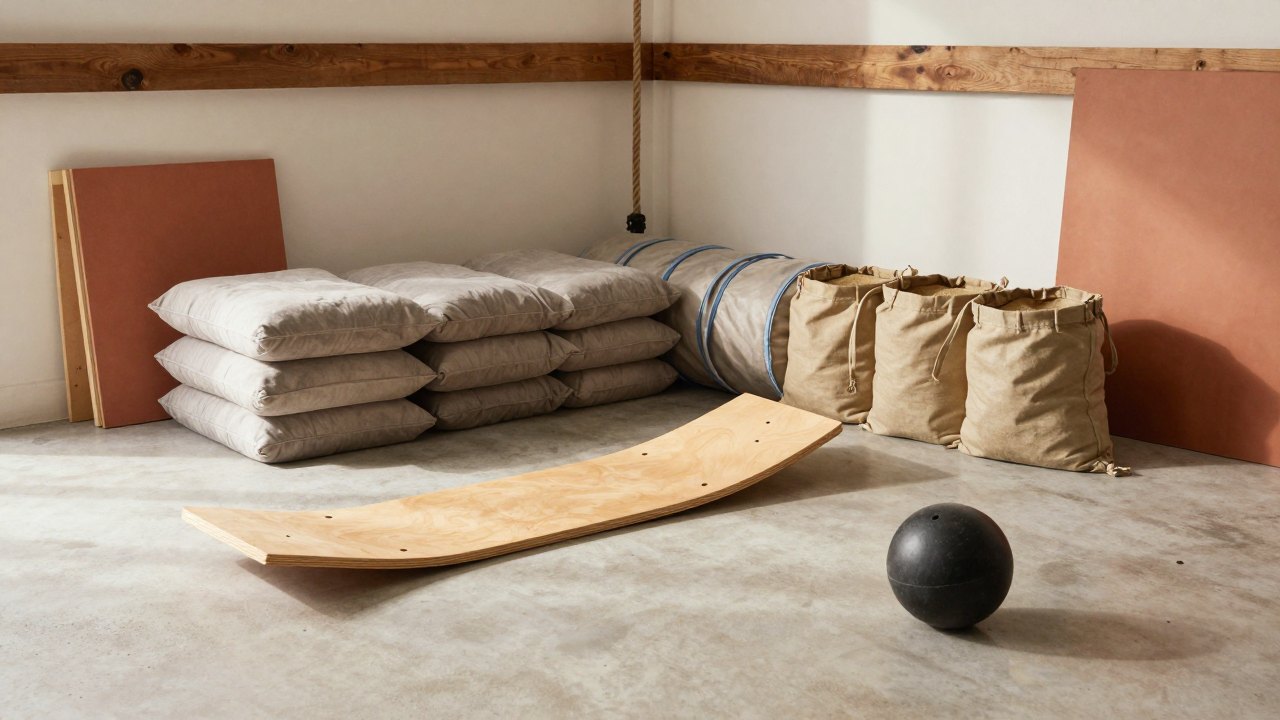
From there you offer two or three minutes of organising input — pushing a heavy cushion across the floor, carrying a weighted bag, hanging briefly from a bar. Then a short main block with one goal: three attempts at stepping between two markers, or four catches of a large soft ball. Then a cool-down that is deliberately boring and predictable, so the child leaves settled rather than wound up.
The whole session might be twenty minutes. That is normal at the start. The programme teaches you to keep sessions short and repeatable, and to write one sentence afterwards: what worked, what you would change, and what the child did that they could not do last week.
Is this programme for you?
This course is for you if…
- Specialists in movement, sport, teaching or support work who want a structured method for children who develop at their own pace
- Parents of children with developmental differences who want to work confidently at home between appointments
- Teachers, teaching assistants and support staff who run movement or sensory breaks
- Practitioners starting a small practice who need a realistic equipment and session plan
- Anyone who prefers a repeatable method to a pile of disconnected exercises
Probably not a fit if…
- Anyone looking for a diagnosis, a clinical assessment or a medical treatment plan
- Families who need a practitioner to work with their child directly — this is a training programme, not a service
- People who want live supervision or one-to-one feedback on their own cases
- Readers who will not try the exercises between lessons; the material only works when it is used
Where you will be eight weeks from now
You will have a room, or a corner of one, set up for movement work: mats that stay put, equipment at child height, a clear space to move and a box for everything else. You will know which three pieces of equipment you reach for first, and which ones you can wait to buy.
You will run sessions from a plan rather than from memory. Each one will have an observation at the start, a regulation block, one main goal and a cool-down. You will have notes from previous sessions, so progress becomes visible instead of being a feeling.
If you are building a practice, you will also have the practical side in place: what you charge, how many sessions a week you can realistically run, how you describe your work to parents, and how you explain the difference between your sessions and clinical care.
What you will not have is a guarantee about any individual child. Children progress at different speeds, and this programme is designed to make your work more structured and more thoughtful, not to promise an outcome.
Questions before you order
How much time do I need each week?
Most people watch two or three lessons a week, about an hour in total, and run one or two practice sessions. The full programme fits comfortably into six to eight weeks, and access runs for 60 days.
Do I need previous training in physical education or therapy?
No. The first three modules start from the basics of movement development and sensory processing. If you already work with children, you can move faster through them and spend your time on the equipment and practice modules.
How do I get access after payment?
Access opens as soon as the payment is confirmed, and you receive the link to the lesson library by email. Everything is watched in your browser; there is nothing to install.
What format are the lessons in?
Recorded video lessons with slides and demonstrations, plus downloadable worksheets, checklists and templates. Lessons are short so you can watch one before a session.
How long is the material available?
Access runs for 60 days from the date of payment. The video lessons are watched online during that period; the worksheets, checklists and templates can be downloaded and kept.
What is the refund policy?
You have 14 days from purchase to ask for a refund. If the programme is not what you expected, write to support within that window and the payment is returned.
Do I need equipment to start?
No. The first sessions can be run with a mat, a large ball and a few household objects. The equipment module shows what to buy first and how to build up in three stages, so you can match spending to your budget.
Is this for parents or for specialists?
Both. The method is the same; the setting is what differs. Parents usually start with the modules on sessions and regulation, while specialists often begin with observation and equipment.
Does the programme replace medical advice or therapy?
No. It is an educational programme about movement and sensory support. It does not diagnose, treat or cure any condition and does not replace care from a doctor or clinician. Medical questions belong with a child's medical team.
Will I be ready to work with children afterwards?
You will have a structured method, session plans and a realistic view of what you need. Whether you are ready to charge for sessions depends on your background, your local rules and your own judgement; the final module covers those practical questions.
Start with one session
Watch the first module this week, run a session next week, and build the rest from there.