Communication · All levels
Command the room before you speak
A recorded programme for executives who want their posture, handshake and gestures to match their status and build trust from the first second.
- 18 recorded lessons
- 6 practical modules
- Video-analysis exercises
- Self-paced access
- 14-day money-back guarantee

Why your body speaks before you do
You can prepare the right words for a board meeting, a negotiation or a first introduction, and still lose the room in the first few seconds. Before you speak, people read your pace, posture, handshake and the way you handle ordinary objects. Those signals are not a personality trait. They are a set of habits, and habits can be reviewed and changed.
Many experienced executives have strong expertise and weak nonverbal noise: a rushed entrance, a handshake that feels uncertain, a phone that keeps pulling attention, a bag that turns into an obstacle. None of these details is dramatic on its own. Together they create a mismatch between the status you have earned and the impression you make.
This programme treats kinetic image as a practical business skill. It covers how you enter a room, hold your posture, offer your hand, take a seat, drink coffee, use a laptop and handle business cards, documents and your phone. The aim is not to perform a character. The aim is to remove the small signals that distract from your competence and to replace them with calm, deliberate movement.
The lessons are recorded, so you can work through them at your own pace and return to the details that matter in your role. Each module ends with a short practice assignment and a video-analysis exercise, so the material moves from explanation into observable behaviour.
What you will be able to do
By the end of the programme, you will have a clearer physical presence in the situations that decide how others read you.
- Enter a room with a settled, upright posture
Set your pace and eye line before you cross the threshold.
- Offer a handshake that feels clear and confident
Use a consistent angle, pressure and duration without overthinking it.
- Take your seat without rushing or fidgeting
Choose a chair, settle your body and prepare for the conversation.
- Handle coffee and water with composure
Reduce the small movements that make a table feel busy.
- Manage your bag, laptop and documents
Arrive, open and put away your work objects without disruption.
- Use business cards and your phone with attention
Give, receive and place items in a way that signals respect.
- Recognise nervous habits in your own footage
Use a simple review method to spot pace, posture and gesture issues.
- Build a personal nonverbal action plan
Choose one or two high-impact adjustments and practise them daily.
- 6
- practical modules
- 18
- recorded lessons
- 6
- video-analysis assignments
- 4 weeks
- suggested pace
The method: watch, compare, adjust
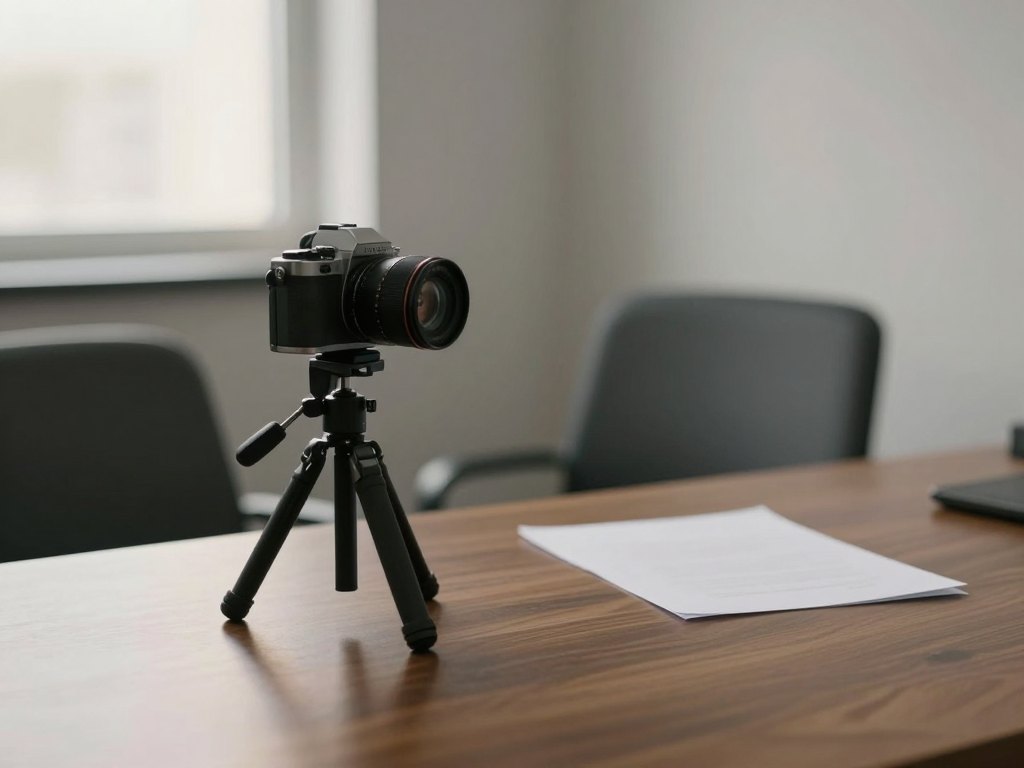
The programme is built around video analysis. You record short, ordinary business situations: walking into a room, greeting someone, sitting down, handling a phone or passing a document. You then review the footage with a structured checklist instead of guessing what others see.
Each review follows the same logic. First you notice what is happening without judgement: pace, weight, eye line, hand position, stillness. Then you compare it with a clear reference point from the lesson. Finally you change one variable at a time and record again. This is how a vague wish to look more confident becomes a specific, repeatable adjustment.
The method is deliberately practical. You do not need a studio, a team or special equipment. A phone, a quiet room and a few minutes are enough to capture the situations you want to improve. The worksheets help you keep the observations short and useful, so the analysis supports your work rather than becoming another project.
How the course works
The programme is self-paced and fully recorded. Each module contains short video lessons, a written checklist and a practice assignment. You can follow the suggested four-week schedule or move faster through the modules that match your current role. The lessons stay available, so you can return to a specific situation before a negotiation, a public appearance or an important introduction.
There are no live sessions and no personal coaching calls. The course is designed for independent study: you watch, practise, record and review. The assignments ask for short observations, not long essays. Most learners will need one to two hours per week to watch the lessons and complete the practice.
The material focuses on business contexts rather than general charm. You will work on entrance, posture, handshake, table behaviour, business objects and video review. The final module brings these elements together into a personal action plan that you can keep using after the course ends.
The programme
Six modules move from first impressions to a personal video-analysis plan. Each module includes recorded lessons and a short practice assignment.
1Module 1 — First impression and the body's signalUnderstand what people read before you speak and set a baseline for your own kinetic image.3 lessons
- How the first three seconds are read
- Mapping your default posture, pace and gestures
- Recording a baseline video without staging it
2Module 2 — Entrance and postureBuild an entrance that looks calm, deliberate and appropriate to the room.3 lessons
- Preparing at the door: breath, pace and eye line
- Walking in without rushing or hovering
- Standing posture that reads as settled authority
3Module 3 — Handshake and greetingMake the handshake clear, brief and consistent with your status.3 lessons
- Reading the approach: when to offer your hand
- Handshake mechanics: angle, pressure and duration
- Greeting sequences in meetings and introductions
4Module 4 — At the tableTake your seat, handle coffee and manage the table without small distractions.3 lessons
- Choosing and taking a seat with intention
- Coffee, water and the small movements around them
- Listening posture and stillness during discussion
5Module 5 — Business objectsUse bags, laptops, cards, phones and papers as props that support composure.3 lessons
- Bag and laptop: arriving, opening and putting away
- Business cards and documents: giving, receiving and placing
- Phone handling that signals attention rather than distraction
6Module 6 — Video analysis and personal planReview your own footage, identify one or two high-impact adjustments and rehearse them.3 lessons
- Frame-by-frame review: what to look for first
- Comparing your baseline with a clear reference
- Building a five-minute daily practice and a 30-day plan

What you get
The programme is designed as a complete self-study toolkit, not a collection of tips.
- 18 recorded video lessons
Short, focused lessons you can watch in any order.
- 6 module workbooks
Checklists and reference notes for each topic.
- 6 video-analysis assignments
Structured prompts for recording and reviewing your own footage.
- Business etiquette reference sheets
Quick guides for handshakes, seating, cards, phone and documents.
- Personal action-plan template
A simple format for choosing and tracking your adjustments.
- Suggested four-week schedule
A pace that fits around a working week.
- Self-paced access
Return to any lesson when a specific situation comes up.
- 14-day refund policy
Review the material and decide whether it fits your needs.
Is this course for you?
This course is for you if…
- Executives and senior managers who want their physical presence to match their role.
- Founders and business owners who meet partners, investors and public officials.
- Specialists moving into leadership who need to look settled in high-stakes rooms.
- Professionals who handle negotiations, interviews or public appearances.
- Anyone who wants a practical, observed approach to nonverbal communication.
Probably not a fit if…
- People looking for acting tricks or a quick charisma formula.
- Those who do not want to record and review short videos of themselves.
- Anyone expecting live personal coaching or in-person practice.
- People who want a scripted sales pitch rather than a transferable method.
- Readers who want a general public-speaking course rather than business etiquette and movement.
After the course
You will enter meetings with a clearer physical routine: a moment at the door, a settled walk, a deliberate handshake and a calmer way of taking your seat. The change is not theatrical. It is the absence of rush, fidgeting and small distractions that used to compete with your message.
At the table, you will know where to put your hands, how to handle coffee and water, and how to manage your phone, cards and documents without breaking the flow of the conversation. In video review, you will have a method for spotting habits that others notice but rarely mention.
The result is a more consistent presence across negotiations, interviews, public appearances and internal meetings. You will still prepare your words, but your body will no longer send a different message. The final action plan gives you a short daily practice so the adjustments hold under pressure.
Questions before you start
How much time do I need each week?
The suggested pace is four weeks at one to two hours per week. The lessons are short, and the assignments ask for a brief recording and review. You can also complete the programme faster or spread it over a longer period.
Do I need any experience or prerequisites?
No prior training in nonverbal communication is required. The programme is written for working adults and starts with a baseline review. You only need a phone or camera, a quiet space and a willingness to look at short clips of yourself.
How do I get access after payment?
After checkout you receive access to the course area, where all recorded lessons, workbooks and assignments are organised by module. Access is granted to the buyer, and you can start with the first module immediately.
What is the refund policy?
You have 14 days from purchase to review the programme and request a refund if it is not right for you. The refund policy applies to the digital course and is described in the checkout terms.
What format are the lessons in?
The lessons are recorded videos with written checklists and worksheets. There are no live sessions. Each module ends with a practice assignment that you complete on your own schedule.
How long does the material stay available?
The course materials remain available in your account after purchase, so you can return to the lessons before a specific meeting or presentation. Access is not limited to the suggested four-week schedule.
Will I have to record myself?
Yes. Video analysis is the core method. You will record short, ordinary business situations and review them with a checklist. The recordings are for your own practice and are not submitted for live feedback.
Is this a public-speaking course?
It focuses on nonverbal presence and business etiquette rather than speech writing or stage performance. The lessons cover entrance, posture, handshake, table behaviour, business objects and video review. It complements, rather than replaces, presentation training.
Can I use the course for a team?
The standard purchase is for one learner. If you want to use the material with a team, you need a separate licence for each participant. The course area is designed for individual self-study.
What if I have a specific business situation in mind?
The final module helps you build a personal action plan. You can apply the checklists to the situations that matter in your role, such as negotiations, interviews, board meetings or client introductions.
Start with the first impression
Build a calmer, more deliberate presence in the rooms where your expertise needs to be seen.