Beauty · All levels
Fifteen minutes a day for a fresher, calmer face
A self-paced programme of gentle facial and body practices you can do at home, at your own pace, with no equipment and no experience.
- 24 recorded lessons
- 15 minutes a day
- Six structured modules
- Three ready-made routines
- Lifetime access

Why your face looks tired before the day has started
Most routines start at the surface. You cleanse, you apply, you wait — and the face in the mirror still looks a little heavy, a little puffy, a little tight around the jaw. That heaviness is rarely about the cream. It is about what the muscles of the face, neck and shoulders have been doing all day and all night without a break.
This programme approaches the face from the other side: through touch, breath and posture. It brings together gentle manual techniques — slow pressure, small movements, quiet holds — that you perform on yourself for about fifteen minutes a day. Nothing here needs equipment, a treatment room or someone else's hands on your skin.
The practices are built for full schedules. Each one is short enough to fit between a shower and breakfast, or to close the day before sleep. You follow a recording, you repeat it, and after a few weeks the sequence becomes automatic — something your hands know without the video.
By the end of the six modules you have a personal routine you can run on your own: a morning sequence for puffiness, an evening sequence for tension, and a small set of techniques you can pull out when your face feels tight, your jaw is clenched or your neck has been bent over a screen for hours.
What you will be able to do
By the end of the programme you can run the practice without a screen in front of you.
- Run a complete 15-minute facial practice
From the first warm contact to the last quiet hold, in one continuous sequence.
- Release tension in the jaw and chewing muscles
Slow, specific work on the muscles that clench during stress and at night.
- Ease morning puffiness with a drainage sequence
A five-minute routine for the eye area, cheekbones, neck and collarbones.
- Read your own tension patterns
Notice where you hold — one side of the jaw, the forehead, the base of the skull.
- Improve how you sit and stand
Simple breath and posture resets that change what your face has to carry.
- Work on your face without stretching the skin
Contact, direction and pressure that respect the tissue instead of pulling it.
- Build a routine that survives a busy week
A weekly plan with short and long versions, so a missed day stays a missed day.
- Adapt every technique to your own face
Adjust pressure and pace to your energy, your sensitivity and the time you have.
- 6
- structured modules
- 24
- recorded lessons
- 15 min
- of daily practice
- 3
- ready-made routines
How the course works
The programme is delivered as recorded video lessons in a library you can open at any hour. The modules build on each other — from simple manual contact to quieter, more subtle work — but nothing is locked. If your jaw is the issue this week, you can go straight to the jaw lessons and come back to the rest later.
Every lesson is short. You watch a technique once, then repeat it with your own hands while the video plays. The practice itself takes about fifteen minutes; the whole session, including a minute of setup and a minute of stillness at the end, fits into twenty.
Alongside the videos you get printable routine cards, a weekly planner and a short self-check sheet, so you can note what changed: which side of the jaw was tighter, when the puffiness eased, how your neck felt after a day at the desk. There is no live schedule to keep up with and no group to report to — the pace is entirely yours.
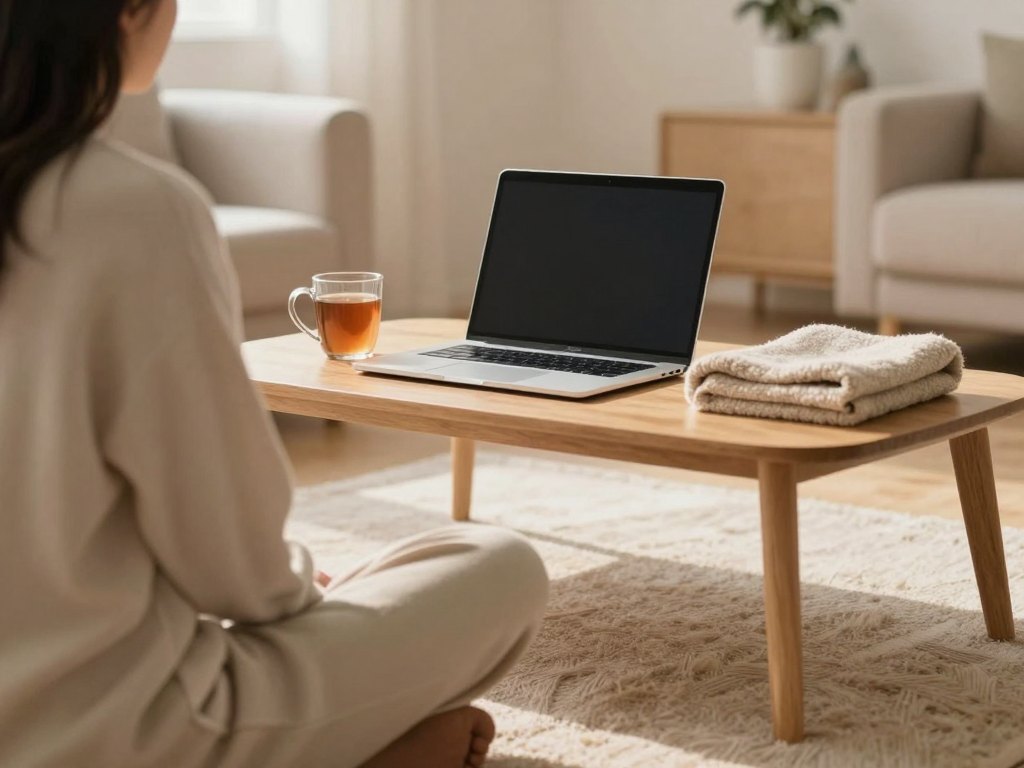
The programme
Six modules, twenty-four recorded lessons. Work through them in order, or start with the sequence your face needs this week.
1Module 1 — Starting the practiceSet up a fifteen-minute habit that actually holds.4 lessons
- How fifteen minutes a day fits into a real schedule
- Setting up your space: hands, mirror, light and posture
- The self-check: reading tension in your face, jaw and shoulders
- Your first full sequence, start to finish
2Module 2 — Breath, neck and postureThe base the face rests on: ribs, neck, shoulders and collarbones.4 lessons
- Breathing low: why the ribs matter for the face
- Releasing the back of the neck and the base of the skull
- Shoulders down, collarbones wide: a two-minute desk reset
- Linking posture to facial tone in one short routine
3Module 3 — Forehead, eyes and cheekbonesGentle manual work on the upper and middle face.4 lessons
- Warming and preparing the skin before any technique
- Smoothing the forehead without stretching the skin
- The eye area: light contact, no dragging
- Cheekbones and the middle of the face: lifting contact
4Module 4 — Jaw, mouth and the lower faceSlow work for the muscles that clench, brace and hold.4 lessons
- Finding the chewing muscles and releasing them slowly
- The jaw joint: small movements, careful pressure
- Tongue position and the resting face
- The lower face and chin: a short evening sequence
5Module 5 — Morning drainage and puffinessA five-minute sequence for the way your face looks at 7 a.m.4 lessons
- Why the face looks heavier in the morning
- A five-minute eye and cheek drainage sequence
- Neck and collarbone work to finish the flow
- The full morning routine, in real time
6Module 6 — Building your own fifteen minutesTurn the techniques into a routine you keep for months.4 lessons
- Choosing your three core techniques
- The evening wind-down sequence
- A weekly plan that survives busy weeks
- Keeping the practice going for months, not days
What you get
Everything is delivered digitally and stays with you.
- 24 recorded video lessons
Six modules, each technique demonstrated and then practised with you.
- Three ready-made routines
A morning drainage sequence, an evening wind-down and a two-minute desk reset.
- Printable routine cards
One card per sequence, so you can practise without looking at a screen.
- A weekly practice planner
Short and long versions of each day, for weeks when time disappears.
- A self-check sheet
Simple notes on tension, puffiness and posture to see change over time.
- Lifetime access
Open the library whenever you like, on any device, for as long as you need it.
- 14-day money-back guarantee
Try the first modules and ask for a refund if the practice is not for you.
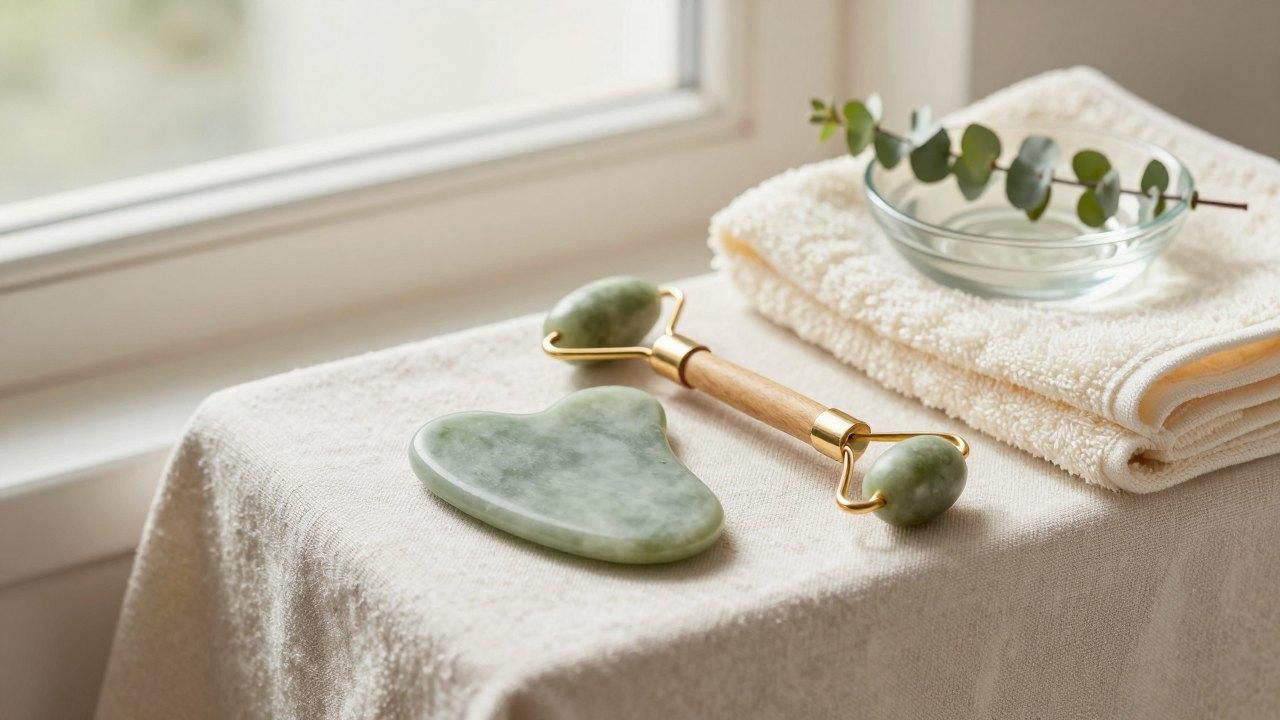
Is this course for you?
This course is for you if…
- You want a short daily practice that fits around work and family
- You notice puffiness in the morning or a tight jaw by the evening
- You spend hours at a desk and feel it in your neck and shoulders
- You prefer learning from recordings at your own pace, without a schedule
- You are happy to work with your own hands and no devices
Probably not a fit if…
- You are looking for a diagnosis, a treatment or a cure for a condition
- You want someone else to perform the techniques on you
- You expect visible change after one or two sessions
- You are not willing to spend fifteen minutes a day on yourself
- You are looking for a clinical or cosmetic procedure
After the course
Mornings look different. Before the first coffee you run a five-minute sequence at the basin: light contact around the eyes, slow strokes along the cheekbones, a few breaths with the collarbones open. The puffiness that used to set the tone for the day is something you can work with instead of waiting out.
Evenings change too. Instead of noticing at midnight that your jaw has been clenched since lunch, you have a short routine that releases the chewing muscles, softens the forehead and lets the neck lengthen again. Many people find this the easiest part of the day to keep, because it also helps them fall asleep.
The longer-term change is quieter: you own a skill. You know where you hold tension, which technique helps on which day, and how to build a fifteen-minute session out of the pieces you remember. No subscription, appointment or equipment stands between you and the practice.
Questions before you start
How much time do I need each week?
About fifteen minutes a day, five or six days a week, is enough to keep the practice going. The lessons themselves are short, and the planner includes a two-minute version for days when nothing else fits.
Do I need any experience, flexibility or prior training?
No. The programme starts from the very first contact with your own face and explains pressure, direction and pace before anything else. Every technique has a gentler version, and you set the intensity yourself.
How do I get access after payment?
As soon as the payment is confirmed you receive an email with a link to the lesson library. Access is tied to your account, so you can open the videos on a phone, tablet or computer.
What if the programme is not for me?
You have 14 days from the purchase date to ask for a refund. Write to support, no explanation needed, and the payment is returned in full.
What format are the lessons in?
Recorded video lessons that you watch and then repeat with your own hands, plus printable routine cards, a weekly planner and a self-check sheet. There is nothing to attend at a fixed time.
How long does the material stay available?
Access does not expire. The full library, including any later additions and corrections, stays in your account for as long as you need it.
Are there live sessions or personal consultations included?
No. This is a fully self-paced programme of recorded lessons and downloadable materials. You work through it on your own schedule, without appointments or group calls.
Do I need oils, creams or any tools?
Clean hands are enough. A little facial oil or cream makes some of the sliding techniques more comfortable, but no devices, rollers or accessories are required.
Is this a replacement for medical or cosmetic treatment?
No. It is a self-care practice for relaxation, comfort and the way your face feels and looks day to day. It does not diagnose or treat any condition — for pain, jaw problems or skin concerns, speak to a qualified professional first.
Can I follow the programme if I have jaw or neck issues?
Ask your doctor or therapist before starting, and show them the technique descriptions if needed. The lessons include gentler alternatives, but the decision about what is safe for your body is theirs, not the course's.
Start with fifteen minutes
Twenty-four recorded lessons, three routines and a practice that stays with you — at your own pace, in your own home.