Creative · All levels
Arrange flowers with confidence, from first stems to professional work
A self-paced programme that takes you from conditioning stems and the spiral bouquet to advanced mechanics and client-ready pieces.
- 32 recorded video lessons
- Core and advanced programmes
- Practical assignments with feedback
- Lifetime access to materials
- 14-day money-back guarantee
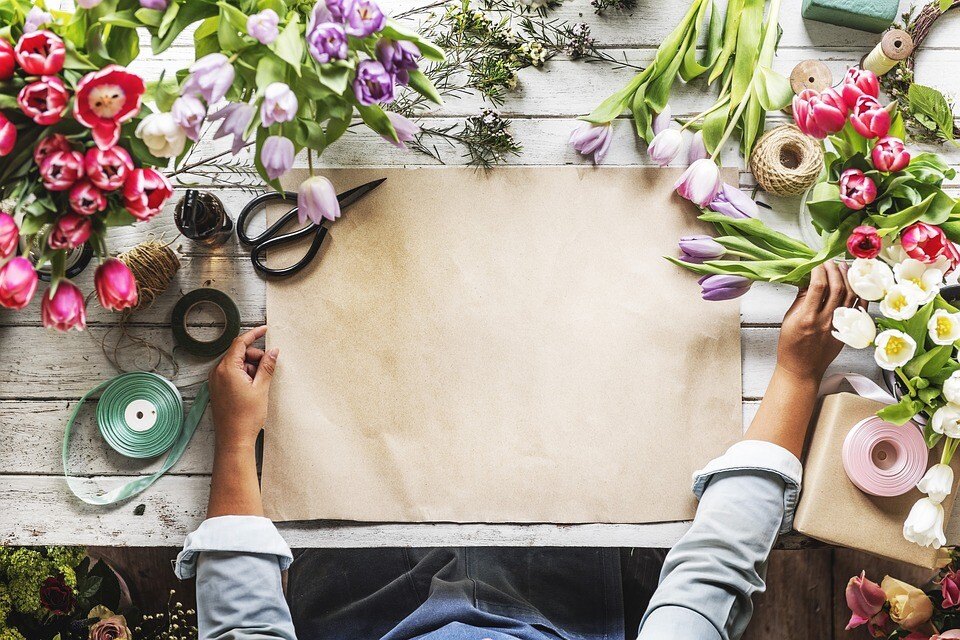
Why good arrangements look effortless and yours do not yet
You bring a bunch of flowers home, put it in a vase, and by the next morning the stems are leaning out of the water and the whole thing looks nothing like the arrangement you pictured. Or you spend an hour on a bouquet for a friend and it falls apart the moment you set it down. The flowers are rarely the problem. Structure, conditioning and the order in which you build are.
Most people learn floristry by copying finished arrangements from photographs, which teaches you to reproduce one shape and nothing else. This programme works the other way round. It gives you the techniques underneath the shape — how a stem drinks, how a spiral holds, how proportion and colour carry a piece — so you can build something new with whatever materials are in front of you.
The course combines two programmes into a single path. The core programme covers the mandatory knowledge and techniques that every arrangement depends on. The advanced programme adds the methods that separate competent work from work people ask to buy: armatures, suspended pieces, large installations and the practical side of pricing, packaging and delivery.
It is a self-paced video course. You watch a lesson, build the piece with real flowers, submit the assignment and move on when you are ready. No previous experience is assumed, and no professional toolkit is needed to begin.
What you will be able to do
Each ability below is taught in a lesson and practised in an assignment.
- Condition and store flowers so they last
Strip, cut and hydrate stems correctly, and know which flowers need cool water and which should stay away from fruit.
- Build a balanced spiral bouquet by hand
Hold, add and turn stems so the bouquet keeps its shape without wire or foam.
- Choose materials that work together
Match flowers, greenery and texture to the occasion, the season and your budget.
- Apply proportion and colour rules
Use simple ratios and a three-colour palette to make any arrangement read clearly from a distance.
- Construct advanced mechanics
Build armatures, frames and suspended pieces that hold heavy or delicate stems safely.
- Plan and build large arrangements
Approach table runners, arches and entrance pieces with a realistic build plan and a workable timeline.
- Price and present your work
Cost a bouquet by materials, time and margin, then photograph and package it for handover.
- 8
- modules
- 32
- video lessons
- 2
- programmes in one path
- 4
- foundation lessons included
How the course works
Every lesson is a pre-recorded video, filmed close enough that you can see hand position, stem angles and the exact moment a bouquet starts to hold. You can pause, rewind and rewatch a technique as often as you need. Nothing disappears after a week and there is no schedule to fall behind.
Lessons end with a practical assignment. You build the piece with your own materials, photograph the result and attach it to the lesson. The next module opens once you have submitted your work, which keeps the pace honest and stops you from watching ten hours of video without ever touching a stem.
Submitted assignments come back with written comments: what works, what to correct and what to try next time. Alongside the videos you get the reference material from the introductory set — material-selection cheat sheets, project checklists and the four foundation lessons on basic techniques — so you can check your choices before you buy flowers.
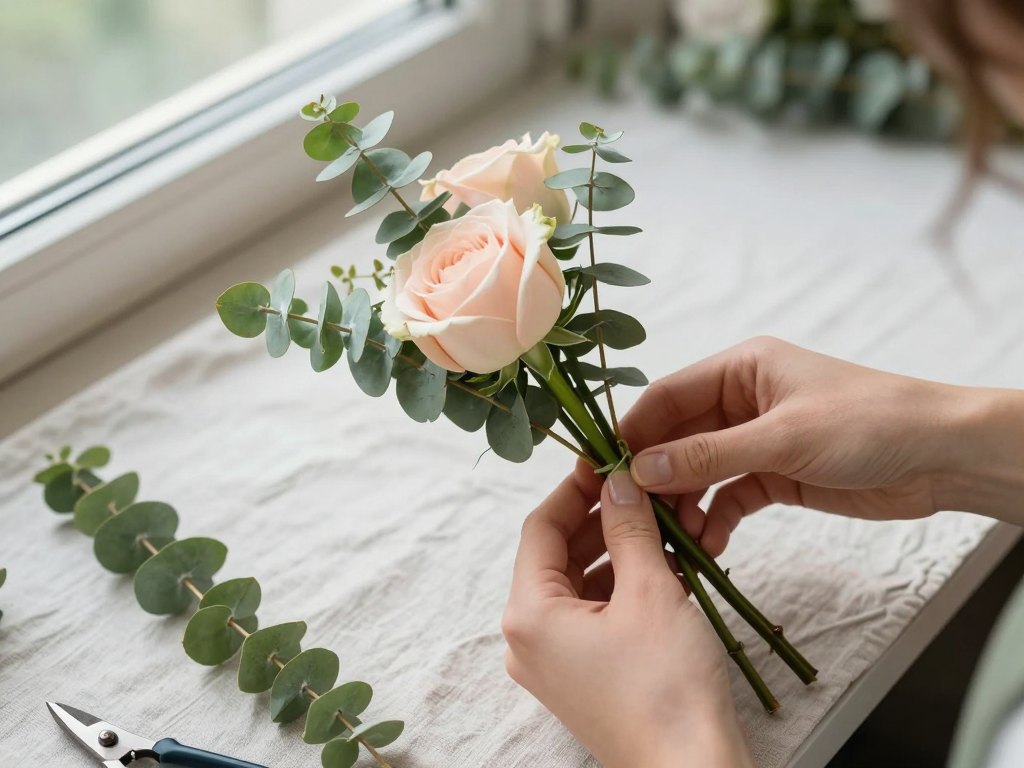
The programme
Modules 1 to 5 make up the core programme; modules 6 to 8 are the advanced programme. Each module closes with an assignment.
1Module 1 — Tools, workspace and flower careThe unglamorous groundwork that decides how long your work lasts.4 lessons
- Setting up a workbench: tools, buckets and surfaces
- Unpacking, stripping and conditioning stems
- Water, temperature and the first 24 hours
- Judging freshness before you buy
2Module 2 — Choosing and combining materialsHow to select stems that suit the occasion, the season and the budget.4 lessons
- The four material groups in every arrangement
- Matching flowers and greenery to the occasion
- Substitution rules when a material is unavailable
- A buying checklist that prevents waste
3Module 3 — The spiral bouquetThe core hand technique that most other work is built on.4 lessons
- Why the spiral holds its shape
- Hand position and the first three stems
- Building outward without crushing the centre
- Tying, trimming and resting the finished bouquet
4Module 4 — Form, proportion and colourThe rules that make an arrangement read clearly from any angle.4 lessons
- The basic shapes: round, oval, cascade and asymmetric
- Proportion rules that keep a piece balanced
- Colour palettes that work with three flowers or thirty
- Using greenery and texture as structure
5Module 5 — Vase and container workArrangements that stand up in a vessel without foam or fuss.4 lessons
- Anchoring stems in a vase without floral foam
- Building height and depth in a low bowl
- Water lines, hidden mechanics and support
- Finishing touches: the last three stems
6Module 6 — Advanced mechanicsFrames, armatures and suspended work for pieces that need more than a vase.4 lessons
- Framing and armature with branches and wire
- Suspended and floating compositions
- Working with delicate and heavy-headed stems
- Transport-safe construction for delivery
7Module 7 — Large pieces and signature workPlanning and building arrangements at a scale you cannot hold in one hand.4 lessons
- Table runners and long low arrangements
- Arch and entrance pieces: planning the build
- Working to a brief and a photo reference
- Time management on installation day
8Module 8 — From practice to paid workThe practical side: pricing, presentation and a portfolio that shows your range.4 lessons
- Photographing your work with a phone
- Pricing a bouquet: materials, time and margin
- Packaging, ribbon and handover
- Building a portfolio of five pieces
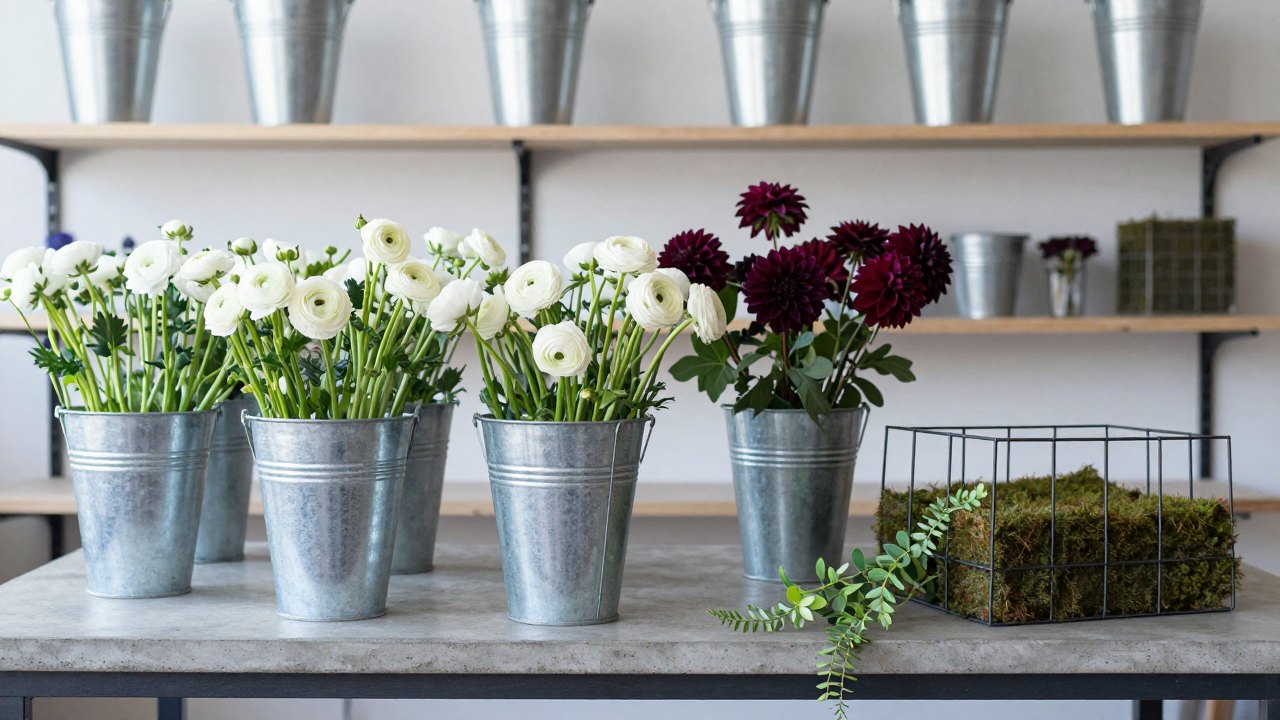
What you get
- 32 recorded video lessons
Close-up filming of every technique, watchable as often as you like.
- Two programmes in one path
Core techniques first, advanced methods once the basics hold.
- A practical assignment for every module
You build the piece yourself and submit a photograph of the result.
- Written feedback on submitted work
Comments on what works, what to correct and what to try next.
- Material-selection cheat sheets
Reference cards for choosing, combining and substituting stems.
- Project checklists
Printable lists for planning, buying and building each piece.
- Four foundation lessons
The introductory lessons on basic techniques, included in full.
- Lifetime access to all materials
Videos, sheets and checklists stay in your account after you finish.
Two programmes in one path
The core programme is the part nobody can skip. It covers tools, conditioning, material selection, the spiral bouquet, form and colour, and container work. These are the techniques that decide whether a piece survives the journey home and whether it looks deliberate rather than accidental.
The advanced programme picks up where the core ends. It deals with mechanics that go beyond a vase — frames, armatures, suspended compositions, transport-safe builds — and with the larger formats: table runners, arches and entrance pieces. It also covers the working side of floristry: photographing finished pieces, costing them honestly and presenting them for handover.
The two parts are sold and studied as one course because they only make sense together. Advanced mechanics on badly conditioned stems still fails, and a perfectly conditioned bouquet with no sense of proportion still looks wrong. Modules open one at a time, so you always practise the foundation before the method that depends on it.
Is this course for you?
This course is for you if…
- Complete beginners who want to understand why arrangements work, not just copy photographs
- People who arrange flowers at home and want their work to last longer and look intentional
- Anyone preparing to take small paid commissions and needing a reliable process
- Hobbyists who have watched endless tutorials and want a structured path with practice
- Career changers who want a serious foundation before investing in a larger training
Probably not a fit if…
- Anyone looking for a single evening of entertainment rather than a multi-module programme
- Florists who already work professionally with advanced mechanics and want only masterclass-level material
- People who cannot source fresh flowers locally for the practical assignments
- Readers hoping for a quick formula that works with any material without practice
After the course
By the end you will have built more than thirty pieces and kept photographs of each one. You will know how to walk into a flower market with a plan, how to substitute when something is missing, and how to judge within a minute whether a stem is worth buying.
You will be able to hand-tie a spiral bouquet that holds its shape, arrange a low bowl with height and depth, and construct a frame for a piece that has to stand on its own without a container. You will also know what your work costs you in materials and time, which is the part most hobby florists never work out.
What the course does not do is promise a business overnight. It gives you a repeatable method and a body of practice. What you build with that — gifts for friends, a weekend market stall, small commissions — depends on how much you put into the assignments.
Questions before you buy
How much time do I need each week?
Most people spend two to three hours per module: roughly an hour watching the lessons and one to two hours building the assignment with real flowers. There is no deadline, so you can spread a module over a week or finish it in an afternoon.
Do I need previous experience or a professional toolkit?
No experience is assumed. The first module starts with tools, surfaces and conditioning. A pair of sharp scissors or secateurs, a bucket, a vase and a roll of twine are enough to begin; specialist materials are introduced only in the advanced modules.
How do I get access after payment?
Access is created automatically once your payment is confirmed. You receive the login details by email, and the course appears in your account immediately, starting with the first module and the foundation lessons.
What is the refund policy?
You have 14 days from purchase to request a refund. If the course is not what you expected, write to support within that period and the payment is returned in full, no explanation required.
What format are the lessons in?
Every lesson is a pre-recorded video with close-up filming of the technique being demonstrated, followed by a written assignment brief. Reference sheets and checklists are supplied as downloadable documents alongside the videos.
Does the material stay available?
Yes. Once purchased, the videos, cheat sheets and checklists remain in your account with no expiry date, so you can return to a technique months later when you need it.
Is my homework checked?
Yes. You attach photographs of your finished piece to the lesson and receive written comments on what works, what to correct and what to try next. Modules open as your assignments are submitted.
Do I have to buy flowers for every assignment?
You need fresh material to practise, but not an expensive order. Several assignments are designed around a small number of stems, and the material-selection sheets show how to work with modest, seasonal flowers instead of premium imports.
Can I take the course if I only arrange flowers for myself?
Yes. The core programme is aimed at anyone who wants to understand the craft, and the advanced modules are useful even if you never sell a piece. The final module on pricing is optional reading for home arrangers.
Start with the first module this week
Thirty-two recorded lessons, eight assignments and written feedback on every piece you build, for a single payment of €89.00.