Fitness · Beginner
Plan and lead group workouts people come back to
A self-paced programme on workout structure, group management, exercise adaptation and participant safety, built for new and practising group instructors.
- 26 recorded lessons
- 6 structured modules
- Class planning templates
- Lifetime access
- 14-day money-back guarantee
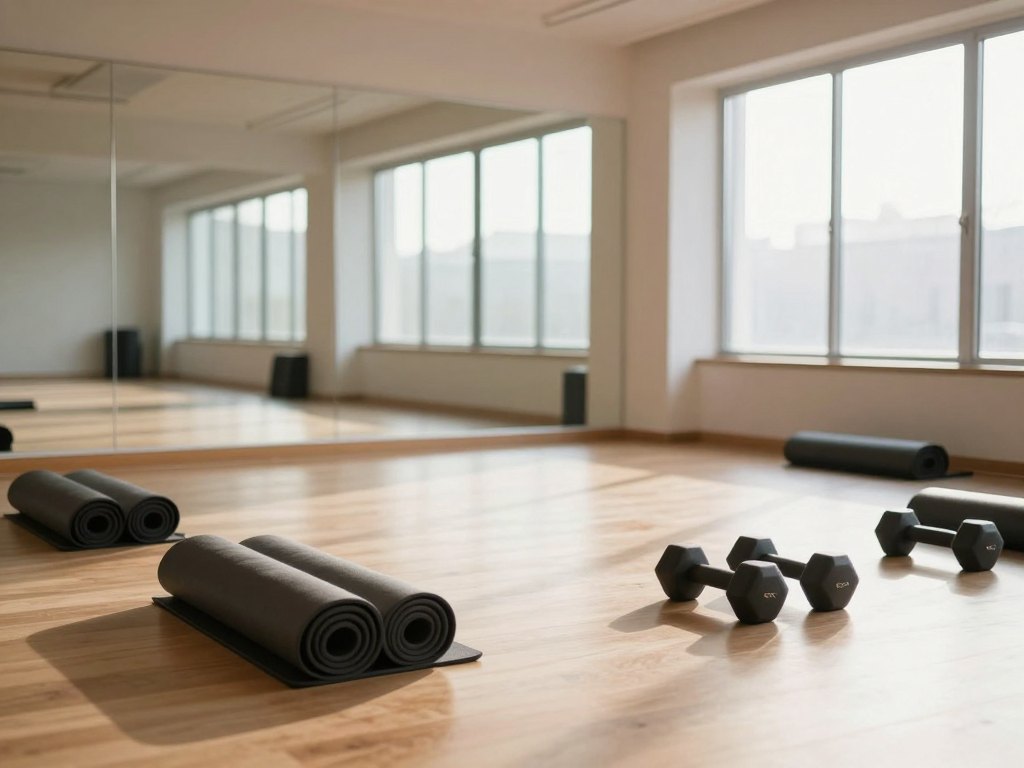
A group class is a plan, not a playlist
Walking into a studio with twenty people waiting and a playlist you made the night before is not the same as teaching. The difference is structure: a warm-up that prepares the joints you are about to load, a main block that builds in the right order, and a finish that leaves people better than they arrived. Most new instructors learn this the hard way, one chaotic class at a time.
The second skill is the group itself. People turn up with different fitness levels, old injuries, tight schedules and no idea what a regression is. You have to cue clearly, stand where everyone can see you, and change an exercise halfway through without losing the room.
This programme covers both sides of the job. It walks through how a group workout is built, how it is led, how it is adapted to the people in front of you, and how to keep the session safe from the first minute to the last. Everything is recorded, so you can study at your own pace and return to any lesson before you teach.
What you will be able to do
By the end of the programme you will have a repeatable process for every class you teach.
- Structure a complete class from warm-up to cool-down
Decide what goes where, in what order and for how long.
- Plan the same session for 45, 55 and 60 minutes
Adjust volume and timing without cutting the parts that matter.
- Cue movement clearly to a mixed room
Combine verbal, visual and counting cues so nobody has to guess.
- Position yourself and demonstrate effectively
Choose the spot in the room where the whole group can follow you.
- Scale any exercise up or down
Build regressions and progressions for the same movement pattern.
- Adapt a class for beginners and deconditioned participants
Keep the session challenging for regulars without losing newcomers.
- Run a pre-class safety check
Inspect the room, the equipment and the plan before the first person arrives.
- Recognise when to stop an exercise or change the plan
Read warning signs in the room and react calmly.
- Build a reusable library of class plans
Leave with a format you can refill every week instead of starting from zero.
- 6
- structured modules
- 26
- recorded lessons
- 3
- class lengths covered
The method: plan it, cue it, adapt it
Every class in this programme is approached through three habits. First you plan: you decide the goal of the session, the movement patterns it will use and the shape of each block. A plan is not a script, but it means you never stand in front of a group wondering what comes next.
Then you cue. Cueing is a skill in its own right, and it is the one most instructors neglect. You will practise naming the movement, saying what changes, counting the tempo and using your own body as the demonstration, so that a person at the back of the room can follow you with the sound off.
Finally you adapt. The same squat is a beginner exercise, a warm-up, a strength set and a conditioning finisher depending on who is doing it and how it is loaded. You will learn to keep one movement and change the version, rather than abandoning the plan the moment someone in the group cannot do it.
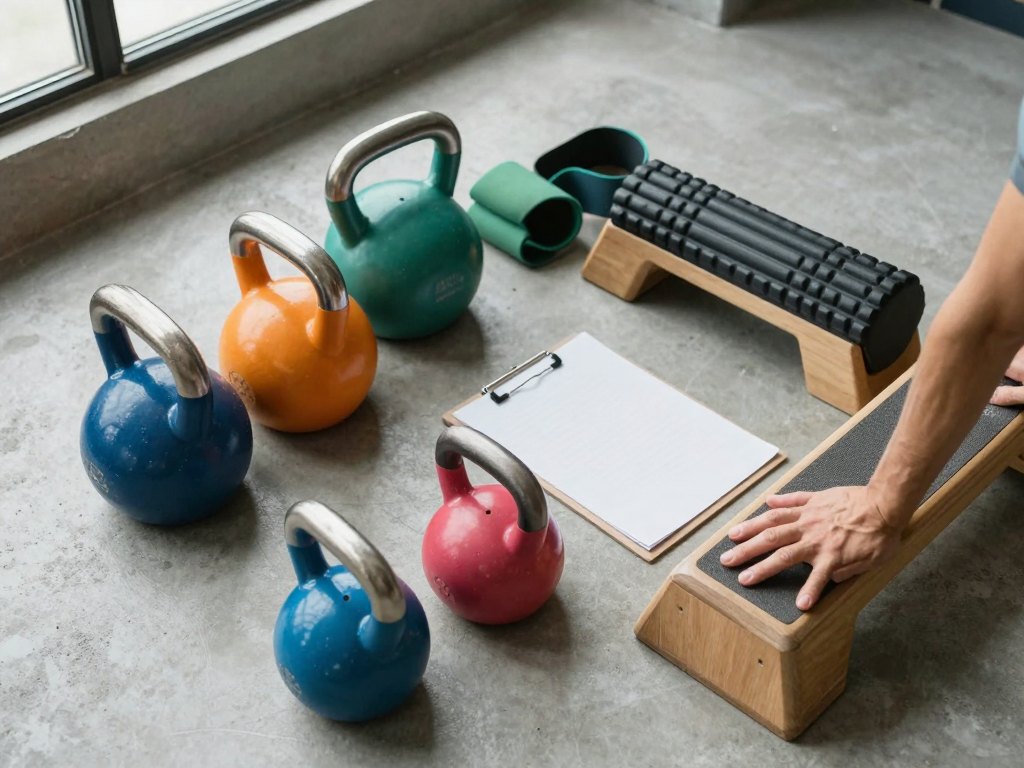
How the course works
The programme is delivered as recorded video lessons grouped into six modules. You watch a lesson, then apply it: each module ends with a short practical assignment where you build or revise part of a real class plan. There is no fixed timetable, so you can move through the material in a few focused evenings or spread it over several weeks.
Alongside the videos you get written templates and reference sheets: a class planning sheet, a regression and progression list, and a pre-class safety checklist. These are the same documents you will use when you plan your own sessions, so the course output becomes your working toolkit rather than a set of notes you never open again.
The lessons are self-paced and self-study. Everything is available immediately after purchase, and you keep access to all current material, including later updates to the lessons and templates.
The programme
Six modules that move from the role of the instructor to a complete, safe class you can teach.
1Module 1 — The group instructor's roleWhat a group class is actually for, and what you are responsible for.4 lessons
- What a group class delivers that a solo workout does not
- Your responsibilities before, during and after the session
- Reading the room: who is standing in front of you
- The boundaries of group instruction and when to refer someone on
2Module 2 — Movement basics for group formatsThe anatomy and movement vocabulary you need to choose exercises well.5 lessons
- Planes of motion and why they shape your exercise selection
- The main muscle groups in a typical group workout
- Mobility and stability: what to prepare and what to load
- Common movement faults you will see in a class
- An informal check of participants before the session starts
3Module 3 — Structuring a group workoutBuilding the warm-up, main block and cool-down in the right order.5 lessons
- The warm-up: raising temperature and preparing joints
- The main block: strength, cardio and mixed formats
- Sequencing exercises so fatigue works for you, not against you
- The cool-down and the last five minutes of class
- Timing the same session for 45, 55 and 60 minutes
4Module 4 — Managing the groupCueing, positioning and keeping a mixed room with you.4 lessons
- Verbal, visual and counting cues that work together
- Where to stand so everyone can see and hear you
- Music, tempo and counting in a group setting
- Latecomers, dropouts and rooms with very different energy levels
5Module 5 — Adapting exercises to different levelsOne movement, several versions, one class.4 lessons
- Regressions and progressions for the same movement pattern
- Working with beginners, older participants and deconditioned clients
- Adapting for limited mobility and previous injuries
- Keeping advanced participants challenged without losing the group
6Module 6 — Safety and professional practiceRisk checks, warning signs and a plan you can keep improving.4 lessons
- The pre-class room and equipment check
- Spotting warning signs and stopping an exercise
- What to do when someone feels unwell mid-class
- Building your class plan library and improving it week by week

What you get
Everything is delivered digitally and stays with you after purchase.
- 26 recorded video lessons
Short, focused lessons you can rewatch before any class.
- Class planning templates
Sheets for 45, 55 and 60-minute sessions, ready to fill in.
- A regression and progression reference
Adaptations for the main movement patterns used in group formats.
- A pre-class safety checklist
Room, equipment and participant checks in one page.
- Practical assignments after each module
You build a real class plan as you move through the programme.
- Lifetime access
Including updates to lessons and templates.
- 14-day money-back guarantee
Read the material, try the assignments, and decide.
The assignments are where the course sticks
Watching a lesson about warm-ups is easy. Designing a warm-up for a specific group, with a specific goal, and then explaining why each exercise is there, is what turns the lesson into a skill. That is what the assignments ask you to do.
In the first assignment you describe a group you would realistically teach: how many people, what level, what equipment. Every later assignment uses that same group, so by the end of the programme you have one complete, defensible class plan built from scratch, plus the reasoning behind each block.
You also rewrite an existing plan. Most instructors have a class they teach on autopilot; the course asks you to take it apart, check the order of the exercises, add regressions for the movements that need them, and put it back together with a proper warm-up and cool-down.
Is this course for you?
This course is for you if…
- New instructors who are about to teach their first group classes
- Practising instructors who plan sessions on instinct and want a reliable structure
- Personal trainers moving from one-to-one work into group formats
- Club staff who lead group warm-ups, circuits or introductory sessions
Probably not a fit if…
- People looking for a workout programme to follow themselves rather than to teach
- Instructors who only want choreography libraries for a single class format
- Anyone expecting live classes, personal supervision or one-to-one feedback
- Participants seeking advice on treating an injury or a medical condition
After the course
You sit down to plan a class and you know where to start. The goal of the session comes first, then the movement patterns, then the blocks, then the timing. The warm-up has a reason, the main block has an order, and the cool-down is not whatever is left of the hour.
In the room, you are not improvising. You have a plan, a set of regressions ready for the people who need them, and a clear idea of where to stand. When someone struggles, you change the version rather than the whole class. When the room is flat, you know which lever to pull.
And you have a toolkit you keep using: planning sheets, an adaptation list and a safety checklist that you run through before every session. That is the difference between teaching a class and simply leading a workout.
Questions before you buy
How much time do I need each week?
Most learners watch two or three lessons per sitting, which takes around an hour, and then spend another 30 to 60 minutes on the module assignment. The whole programme can be completed in three to four weeks at a relaxed pace, or faster if you have more time.
Do I need previous experience or qualifications?
No. The programme starts from the role of the group instructor and builds up, so it suits people preparing to teach their first classes as well as instructors who already teach and want a more reliable structure. Basic familiarity with exercise equipment helps but is not required.
How do I get access after payment?
Access is created immediately after checkout. You receive the link to your course area by email, and all modules, templates and checklists are unlocked from the first day. If the email does not arrive, check your spam folder before contacting support.
What format are the lessons in?
The lessons are recorded videos with supporting written material. Each module ends with a practical assignment that you complete on your own using the provided templates. There are no live sessions and no scheduled calls.
Does the material stay available?
Yes. You keep lifetime access to the lessons, templates and checklists, including later updates to the material. You can return to any lesson before a class or when you are planning a new format.
What is the refund policy?
You have 14 days from purchase to request a refund. If the programme is not what you expected, contact support within that period and the payment is returned according to the store's refund terms.
Do I need to be very fit myself to teach a group?
You need to demonstrate movements clearly and safely, not outperform the class. The programme focuses on planning, cueing and adaptation, and shows how to teach versions of an exercise that you can perform comfortably while the group works at their own level.
Will this help me plan classes for different equipment setups?
Yes. The planning templates are built around blocks rather than fixed exercises, so you can fill them with bodyweight movements, small equipment or machines depending on what your room offers. Module 3 covers how to keep the structure when the equipment changes.
Can I teach from this material straight away?
The programme gives you the structure, the safety checks and the planning tools. Whether you can start teaching depends on your local requirements for instructors, which vary by country and by club, so check those before you take on a class.
Plan your next class properly
Six modules, 26 recorded lessons and the templates you will use every week. Start whenever you like and keep access for good.