Wellbeing · Beginner
Learn to meditate by building your own practice
A self-paced programme that takes you from a first short sit to a personal meditation you can design for any situation — plus a guided energy practice for low-energy days.
- 24 short video lessons
- 7 structured modules
- Guided energy practice included
- Lifetime access
- 14-day money-back guarantee
Why meditation keeps slipping out of your week
You have probably tried meditating already. Maybe an app, maybe a video, maybe ten quiet minutes in the kitchen before everyone else woke up. It felt fine for a few days, then the mornings got busy and the habit quietly disappeared. The problem is rarely discipline. It is that most guided tracks are generic: someone else's voice, someone else's pace, someone else's idea of what calm should feel like.
There is a second problem too. When you only ever follow recordings, you never learn how a meditation is actually put together. So when your situation changes — a hard week, a deadline, a stretch of low energy — you have nothing to fall back on except scrolling through a library and hoping something fits.
This programme teaches the skill behind the practice. You work through a short, structured method step by step, and by the end you can write and record a meditation for your own situation, in your own words, at a length that fits your day. Alongside that you get a complete guided energy practice you can return to whenever you need to feel awake and steady again.
Everything is recorded and self-paced. There are no live calls to attend and no schedule to keep up with — you move through the lessons when it suits you, and the material stays available afterwards.
What you will be able to do
By the last module you will have a working practice rather than a folder of bookmarked videos.
- Start a meditation without pressing play
Sit down, settle, and guide yourself through a complete short practice from memory.
- Settle body and breath in two minutes
A short sequence of posture and breathing adjustments that marks the start of every session.
- Return your attention when the mind wanders
Practical ways to come back to the present without turning it into a fight with yourself.
- Choose the right practice for your state
Pick a different approach for a tired morning, a scattered afternoon or a restless evening.
- Write a ten-minute meditation in your own words
Use a simple structure so the script has a beginning, a middle and a clear ending.
- Record a practice you can reuse for years
Voice, pace and pauses — how to make a recording that you will actually want to listen to.
- Recharge with a guided energy session
A ready-made practice for the mid-afternoon dip, built around breathing and attention.
- Keep a weekly rhythm that survives a busy month
Set a realistic minimum so the habit holds even when nothing else in the week does.
- 7
- structured modules
- 24
- video lessons
- 1
- guided energy practice
- 10–15 min
- per lesson
The method: five steps and one ready-made practice
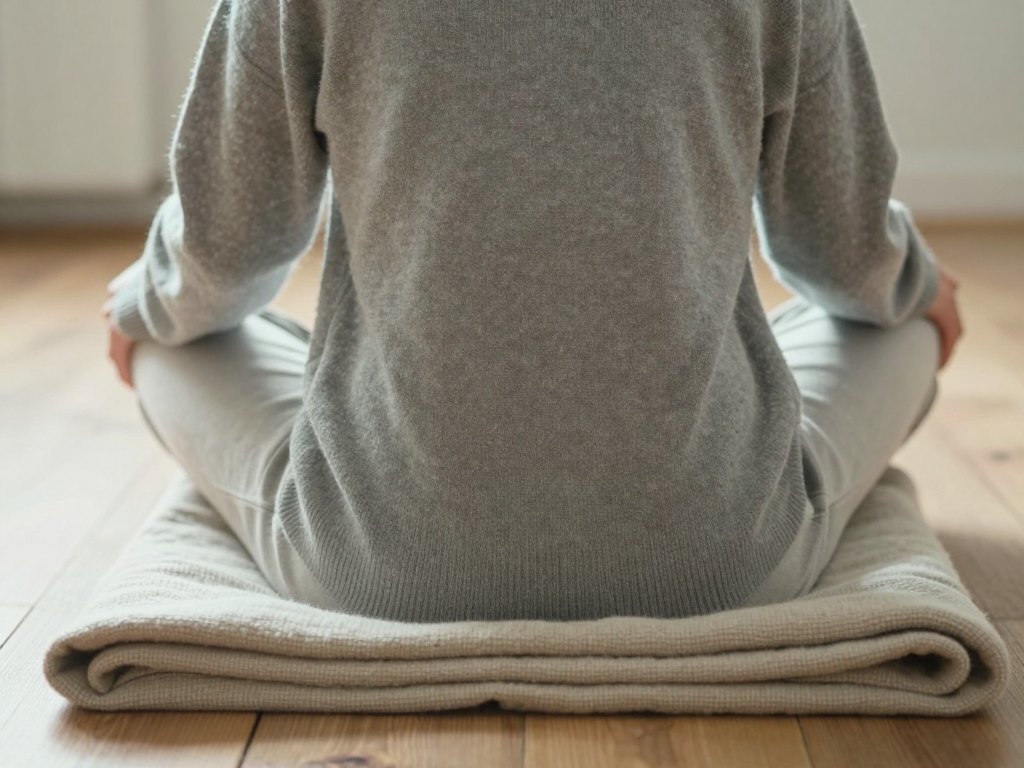
The programme is built on a five-step framework that turns meditation from a vague intention into a repeatable procedure. Each step answers one question, so you are never sitting there wondering what you are supposed to be doing. Step one is where and how you sit — a posture you can hold comfortably and a place where you will not be interrupted. Step two is the breath: how to watch it, count it and lengthen the exhale without forcing anything.
Step three is attention. This is where most people give up, so the lessons deal with it directly: what to do when thoughts arrive, how to come back without criticising yourself, and how to handle restlessness, sleepiness and the flat boredom of a practice that suddenly feels pointless. Step four is intention — naming the situation you want to work with and turning it into a phrase or an image that carries through the session. Step five is composition: putting the four earlier steps together into a complete meditation of your own.
The second half of the programme is a ready-made practice for energy. It is a seated session that combines a breathing pattern with attention moving through the body, and it finishes with a short, deliberate return to the room. You do not have to build anything to use it: press play, follow the guidance, and finish more alert than you started. Most people use it in the morning or in the mid-afternoon dip, when the day has drained the first burst of concentration and the next task still has to be done.
How the course works
The course is a set of recorded video lessons, each ten to fifteen minutes long, grouped into seven modules. Every module opens with a short explanation of what the step is for, then moves into guided practice, then closes with a small assignment you do on your own — usually five to ten minutes of sitting, or a few lines of writing on the worksheet that comes with the module.
You can work through it in a weekend if you want the whole picture quickly, or take one module a week and let each step settle before the next. Both work. The lessons are short on purpose: they are designed to fit into a lunch break or the twenty minutes after the household goes quiet, because a practice you can actually schedule is the only one that survives.
There are no live sessions and nothing to attend. The videos play on a phone, tablet or computer, the worksheets are printable, and the guided energy practice is a single continuous session you can return to as often as you like. Once the course is in your account, it stays there.
The programme
Seven modules, twenty-four lessons, one finished practice of your own at the end.
1Module 1 — Before you sitSet up the conditions so the practice has somewhere to happen.3 lessons · 35 min
- What meditation is and what it is not
- Choosing a time of day you will actually keep
- Your space, your seat, your phone
2Module 2 — Step 1: Settling the bodyPosture and physical relaxation as the opening of every session.4 lessons · 50 min
- Finding a posture you can hold for ten minutes
- A body scan from the feet to the forehead
- Releasing the shoulders, jaw and hands
- When your back, knees or neck complain
3Module 3 — Step 2: Breathing without forcing itUsing the breath as an anchor rather than a performance.4 lessons · 45 min
- Watching the natural breath
- Counting and anchoring techniques
- Lengthening the exhale to settle down
- What to do when breathing feels tight
4Module 4 — Step 3: Working with a busy mindThe practical core: attention, distraction and coming back.4 lessons · 50 min
- Noticing thoughts without following them
- Returning attention without self-criticism
- Restlessness, sleepiness and boredom
- Meditating on a difficult day
5Module 5 — Step 4: Choosing your intentionTurning a real situation into something the practice can hold.3 lessons · 40 min
- Naming the situation you want to work with
- Turning an intention into a phrase or an image
- Matching the practice to your state: tired, scattered, wound up
6Module 6 — Step 5: Writing and recording your own meditationCompose, record and test a practice that is entirely yours.3 lessons · 40 min
- Structuring a ten-minute practice from start to finish
- Writing a script in your own words
- Recording it and testing it for a week
7Module 7 — The guided energy practiceA complete ready-made session for low-energy moments.3 lessons · 40 min
- How the energy practice works and when to use it
- Full guided session: from heaviness to alertness
- Fitting it into a morning or a mid-afternoon dip

What you get
- 24 recorded video lessons
Short, practical and grouped into seven modules you can follow in order.
- A guided energy practice
One continuous session you can replay whenever you need to feel more awake.
- A worksheet for every module
Short written exercises that turn each step into something concrete.
- A meditation script template
The structure used in Module 6, so your first draft has a shape to follow.
- A weekly rhythm checklist
A one-page plan for keeping the practice alive in a crowded week.
- Your own recorded meditation
By the end you have a finished practice in your own voice, made for your own situation.
- Lifetime access
The lessons and materials stay in your account with no expiry date.
- 14-day money-back guarantee
Work through the first modules and ask for a refund if it is not for you.
Is this course for you?
This course is for you if…
- You have tried guided meditations and want to understand how they work
- You want a practice you can run without a phone or a subscription
- You need something short enough for a real working day
- You are curious about a structured, step-by-step approach rather than a library of tracks
- You want a ready-made session for the moments when your energy drops
Probably not a fit if…
- You are looking for live classes, group calls or one-to-one guidance — this is a recorded programme
- You want a spiritual doctrine or a belief system rather than a practical method
- You expect meditation to replace professional help for a health or mental health condition
- You are not willing to sit for ten minutes between lessons
After the course
A few weeks in, the difference is not dramatic and it is not supposed to be. It is that you have a procedure. When the day gets loud, you know what to do first: sit down, settle the body, find the breath, name what you are working with. Ten minutes later you are back at the desk with a little more room between you and the next thing that arrives.
You also have something most people never get from an app: a meditation written for you. It is in your own words, at your own pace, addressing the situation you actually have rather than a generic idea of stress. You can rewrite it whenever your circumstances change, and the method in Modules 1 to 5 tells you exactly how.
And on the days when sitting still feels impossible because you are flat, foggy or running on four hours of sleep, there is the energy practice. It is the shortest path in the course from heaviness to alertness, and it is the session most people keep using long after they finish the lessons.
Questions before you buy
How much time do I need each week?
One module takes roughly forty minutes of video plus a short practice assignment, so an hour a week is enough to keep moving. If you prefer, you can complete the whole programme over a weekend and then work with the practices at your own pace.
Do I need any experience with meditation?
No. The programme starts from the assumption that you have never sat down to meditate deliberately. Every step is explained and then demonstrated, and the first module deals with the practical setup before any practice begins.
How do I get access after payment?
The course appears in your account as soon as the payment is confirmed, and you receive an email with the link. There is nothing to install and no call to schedule — you open the first lesson and start.
What format are the lessons in?
Recorded video lessons of ten to fifteen minutes, grouped into seven modules, with a worksheet for each module and one continuous guided energy session. Everything plays in a browser on a phone, tablet or computer.
How long does the material stay available?
Access does not expire. The lessons, worksheets and the guided practice stay in your account, including any future updates to the course materials.
Is there a refund policy?
Yes. You have 14 days from purchase to ask for a refund, no explanation required. Work through the first modules and the energy practice, and if the approach is not right for you, contact us within that window.
Do I need any equipment?
A chair or a cushion, a quiet corner and something to play the lessons on. A notebook helps for the worksheets, and a phone or computer with a microphone is enough to record your own meditation in Module 6.
Are there live sessions or personal feedback?
No. This is a recorded, self-paced programme: you follow the lessons on your own schedule and there are no live calls, group sessions or individual consultations included.
What if meditation has never worked for me before?
That is a common starting point. Most failed attempts come from following a track that did not fit, or from not knowing what to do when the mind wandered. Module 4 addresses exactly that, and Module 5 helps you match the practice to the state you are actually in.
Start with ten minutes
Seven modules, twenty-four short lessons and a finished practice of your own — with a guided energy session to use from day one.