Business · Intermediate
Read Incoterms correctly and price every delivery with confidence
A self-paced programme on Incoterms 2020, transport models, export pricing and customs value, built around worked examples from real shipments.
- 20 recorded lessons
- Worked calculation examples
- Final assessment included
- Self-paced, lifetime access
- 14-day money-back guarantee
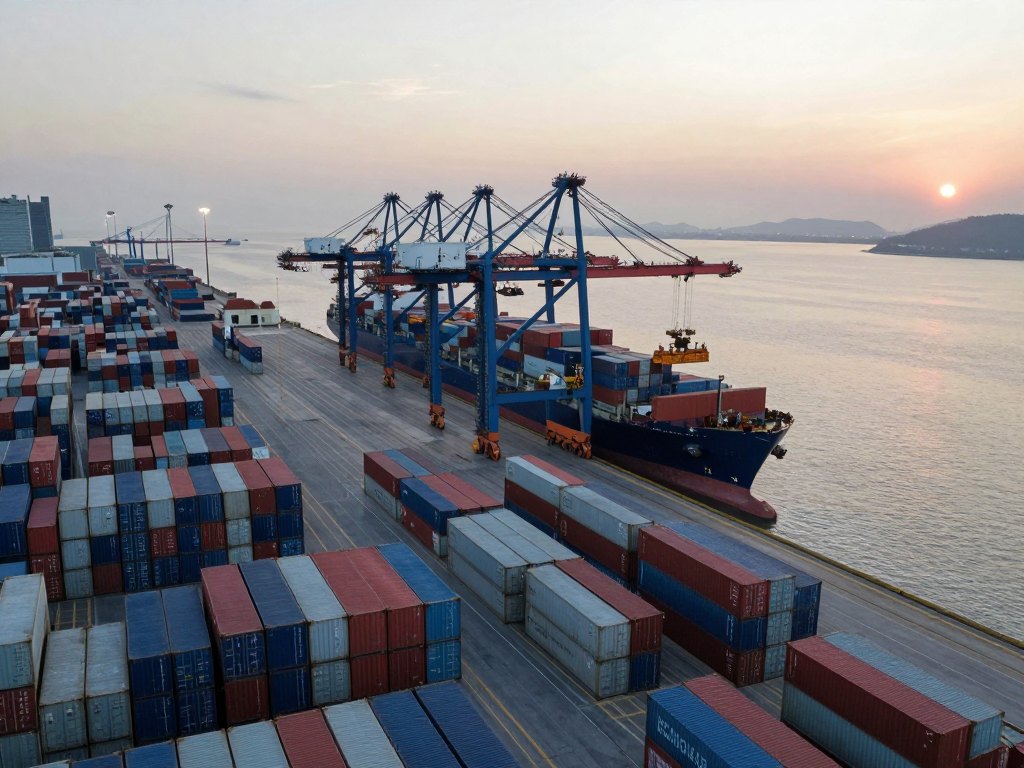
Why Incoterms arguments cost more than they should
Most disputes in international deliveries do not start with a lost container. They start with a three-letter term that two companies read differently. One side believes the seller pays for unloading; the other believes the buyer does. One side treats insurance as included; the other discovers the gap only after the damage report arrives.
Incoterms exist precisely to remove that ambiguity, yet the rules are short, dense and easy to apply by habit rather than by reading. Teams copy the term from the previous contract, forwarders price what they assume it means, and the customs declaration is filled in from an invoice that never matched the delivery conditions in the first place.
This programme takes the 2020 edition apart term by term and puts it back together on shipment examples: what the seller actually pays, where risk passes, what an export price should include and how the chosen term changes the customs value declared on import.
It is written for people who work with these documents every week — logistics specialists, foreign-trade staff, forwarders, importers, exporters and procurement managers — and who need answers they can defend in a negotiation, a claim or an audit.
What you will be able to do
By the end of the programme you can work through a shipment from the contract clause to the customs declaration without guessing.
- Choose the right term for a shipment
Match the term to the transport mode, the cargo and who controls the main carriage.
- Explain exactly where risk passes
Point to the moment risk moves from seller to buyer under each of the eleven terms.
- Split costs between buyer and seller
List loading, main freight, insurance, unloading and duties line by line.
- Build an export price from the term
Quote a delivery that matches the obligations you have actually accepted.
- Calculate customs value on import
Include and exclude the right components using worked examples and adjustments.
- Spot the 2010-to-2020 differences
Know which clauses changed and where old contract templates still mislead.
- Read shipping documents critically
Check that the contract, invoice and transport document name the same term and place.
- Defend your position in a dispute
Use the wording of the term itself instead of assumptions about who pays what.
- 7
- modules
- 20
- recorded lessons
- 4
- term groups covered
- 1
- final assessment
The method: one shipment, read end to end
Every term in the course is examined through the same five questions: who contracts the carriage, who pays which cost, where risk passes, which documents carry the term, and what the term does to the price and to the customs value. Because the questions never change, the terms stop being a list to memorise and become a system you can apply to a route you have never shipped before.
The lessons then move from the rule to the calculation. A term is only useful when you can put a number next to it, so each group of terms is followed by worked examples: a container priced on FCA and on CIF, a delivery quoted DAP and then DDP, an invoice whose customs value has to be adjusted because insurance and freight were declared in the wrong place.
The final part of the programme connects the commercial side with the paperwork. You will see how the same term has to appear consistently in the contract, the invoice, the packing list and the transport document, and what happens when one of them says something different.

How the course works
The programme is delivered as recorded video lessons in a personal learning account, organised into seven modules. You work through them in order at your own pace: watch a lesson, open the reference sheet for the term it covers, then run the calculation or the document check that follows it.
Each module ends with a short set of practice tasks built on realistic shipment data — a route, a cargo, a price and a set of documents — so you apply the rules rather than only reading them. The final module brings everything together in a case workshop and a graded assessment that shows which terms you have genuinely understood and which ones need a second pass.
There is no fixed schedule and no live attendance requirement. Your materials stay in the account after you finish, so you can return to a specific term the next time a contract lands on your desk.
The programme
Seven modules, each built around the same five questions: carriage, cost, risk, documents and price.
1Module 1 — Incoterms 2020: the frameworkWhat the rules regulate, what they leave to the contract, and how the 2020 edition differs from 2010.3 lessons
- What Incoterms regulate and what they deliberately leave out
- The 2010 to 2020 revision: which clauses changed and why
- Term categories, abbreviations and the transport modes behind them
2Module 2 — Group E and Group F: shipment and unpaid main carriageThe terms where the buyer arranges the main carriage, and the handover points that follow from it.3 lessons
- EXW: handing over at the seller's premises and the limits of that handover
- FCA, FAS and FOB: where risk actually passes
- Choosing between FCA and FOB for containerised cargo
3Module 3 — Group C: main carriage paid by the sellerThe trickiest group: two points of delivery, two sets of obligations, one contract of carriage.3 lessons
- CFR, CIF, CPT and CIP: cost and risk travel on different routes
- Insurance cover under CIF and CIP: minimum cover versus all risks
- Where costs and risk split in C-terms, and the mistakes that follow
4Module 4 — Group D: delivery at destinationTerms where the seller carries the goods to the named place and the buyer's obligations shrink.3 lessons
- DAP and DPU: unloading, the last mile and who is standing there
- DDP: duties, taxes and the practical limits of the seller's role
- Comparing D-terms with C-terms on the same route
5Module 5 — Incoterms and the export priceTurning a chosen term into a defensible quotation with every cost in the right place.3 lessons
- Building an export price from the obligations of the chosen term
- Worked calculations: freight, insurance, loading, unloading and duties
- Documenting the term in the contract, invoice and transport papers
6Module 6 — Customs value on importWhat the declared value includes, what it excludes and how the term changes the arithmetic.3 lessons
- Customs value: the components that belong in the declaration
- Worked customs value calculations and typical adjustments
- Incoterms in foreign-trade documents of the EAEU
7Module 7 — Case workshop and final assessmentOne shipment taken from enquiry to declaration, then a graded check of what you have learned.2 lessons
- Case workshop: selecting a term and pricing a full shipment
- Final assessment with review of the answers

What you get
Everything is delivered inside your learning account; nothing depends on attending a session.
- 20 recorded video lessons
Short, focused lessons that walk through each term and each calculation step by step.
- Term-by-term reference sheets
One page per term covering carriage, cost, risk, documents and the named place.
- Worked calculation examples
Export price and customs value built up line by line, with the reasoning shown.
- Document checklists
What to verify in the contract, invoice, packing list and transport document before dispatch.
- Practice tasks after each module
Realistic shipment data to apply the rules yourself before moving on.
- Final assessment with review
A graded check at the end of the programme, with the answers explained.
- Lifetime access to the materials
Return to any lesson or sheet whenever a new contract needs checking.
Is this course for you?
This course is for you if…
- Logistics specialists and forwarders who prepare and price international shipments
- Foreign-trade specialists who draft contracts, invoices and declarations
- Importers and exporters who need to check what a supplier's term actually means
- Procurement and supply-chain managers responsible for delivery conditions
- Specialists moving into international transport from domestic operations
Probably not a fit if…
- Complete beginners with no exposure to commercial or shipping documents — the pace assumes you have seen an invoice and a transport document
- People looking for a legal opinion on a specific contract or dispute; the course teaches the rules, not case advice
- Anyone hoping for a live class schedule or one-to-one mentoring — the programme is recorded and self-paced
- Specialists who only need customs tariff classification; that is a different subject and is not covered here
After the course
The next contract that arrives with a delivery term on it will look different. Instead of accepting the three letters as given, you will read them against the named place, check whether the transport mode fits, and see immediately which costs and which risks you have just taken on.
When a quotation is challenged, you will be able to show the arithmetic: what the freight adds, what insurance adds, what unloading adds, and why the price changes when the term changes. When a declaration is questioned, you will know which components belong in the customs value and which do not.
Most of all, you will have a repeatable routine — five questions, one reference sheet, one calculation — that keeps the commercial side, the transport side and the paperwork saying the same thing.
Questions before you buy
How much time does the course take?
The programme contains 20 recorded lessons across seven modules. Most learners watch two or three lessons per sitting and finish the whole course in three to four weeks, but there is no schedule to keep — you can move faster or spread it over several months.
Do I need previous training in logistics or customs?
No formal qualification is required, but the course is written for working specialists. You should be comfortable reading a commercial invoice, a packing list and a transport document. If you have never seen these, the lessons will still make sense, but you will get more from them with a little practical exposure.
How do I get access after payment?
Your order confirmation contains the details for opening a personal learning account. The modules, reference sheets and practice tasks appear there straight away, and you can start with the first lesson within minutes of paying.
What is the refund policy?
You have 14 days from purchase to request a refund. If the programme is not what you expected, write to support within that period and the payment is returned; you do not need to justify the decision.
What format are the lessons in?
Lessons are recorded videos with accompanying reference sheets, checklists and calculation examples. Each module closes with practice tasks, and the last module contains a case workshop and a graded final assessment.
Does the material stay available after I finish?
Yes. Access to the lessons and downloadable materials does not expire, so you can return to a specific term or calculation whenever a new shipment requires it.
Is this about the 2020 edition of Incoterms?
Yes. The programme is built on the 2020 edition and covers the eleven terms in their four groups, together with the differences from the 2010 edition that still cause errors in older contract templates.
Are there live sessions or a tutor I can call?
No. The programme is fully self-paced and recorded, which is why it can be offered at this price. Support handles access and payment questions, but the teaching itself happens through the lessons, the reference sheets and the practice tasks.
Will this help me with customs value calculations?
Yes. One full module is dedicated to customs value on import, including which components belong in the declaration, how the chosen delivery term changes the arithmetic, and worked examples of typical adjustments.
Start with the next contract on your desk
Seven modules, 20 recorded lessons and a final assessment — everything you need to read a delivery term, price it and declare it correctly.