Business · All levels
Learn to find, win and sell land plots
A 12-week recorded programme on land auctions, permitted-use changes and building a land bank you can hold or sell.
- 36 recorded lessons
- 8 structured modules
- Document templates and samples
- Lifetime access
- 14-day money-back guarantee
Why land rewards patience and paperwork
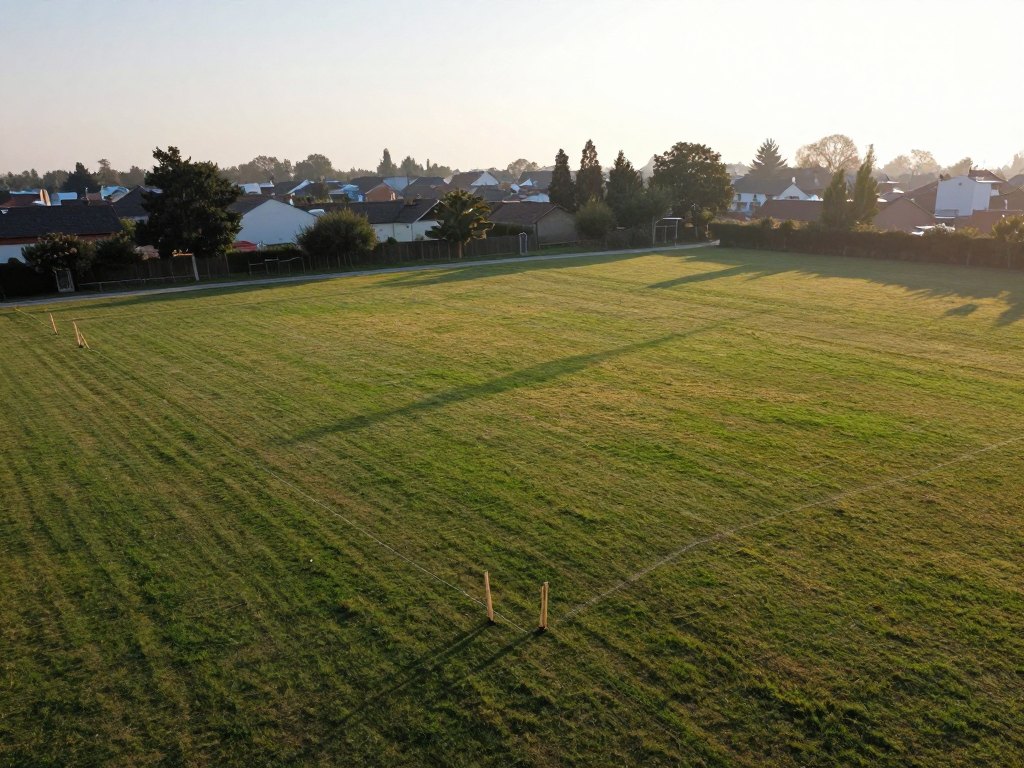
You have probably looked at land at least once. A cheap plot on an auction list, a field at the edge of a town, a hectare advertised far below the price of the houses around it. Then came the categories, the territorial zones, the permitted use types — and the whole thing turned into a wall of unfamiliar terms. Most people close that tab and go back to work that pays by the hour.
That is precisely why land is worth learning. The barrier is rarely capital; it is knowing which documents matter, in what order, and what a plot is allowed to become. A plot's value seldom changes because someone negotiated well. It changes because a permitted use type was amended, a layout scheme was approved, or an auction was won by the only bidder who had done the reading.
This programme walks that trail in order: reading a lot, valuing it against the local market, winning it, changing what it may be used for, and selling it to a buyer who is looking for exactly that. Every module ends with a task performed on real lots from your own region, not on abstract examples.
You are not asked to believe anything. You are asked to open a cadastral record, compare three listings, fill in a screening sheet and see for yourself whether the numbers hold.
What you will be able to do
Each item below is practised during the programme, not just explained.
- Screen a plot in under an hour
Cadastral data, zoning, access and comparables, checked in a fixed order so nothing is missed.
- Shortlist auction lots that others skip
Read lot lists with a filter built on value rather than on the headline price.
- Prepare the document pack for a bid
Deposit, application and the papers you need the moment the result is published.
- Enter through an assignment of lease rights
A lower-capital route into a plot before committing to a full purchase.
- Change a plot's permitted use type
Choose a target use type, build the justification and file the application.
- Draft a plot layout scheme
Prepare and submit an application for a plot without going through an auction.
- Build a land bank with a hold-or-sell rule
A register of plots, costs and target outcomes so decisions are not emotional.
- Write a listing a buyer answers
Buyer portrait, plot description and the main objections handled before the first call.
- Judge when to walk away
Separate a plot with a fixable problem from one that will never pay back the effort.
- 8
- modules
- 36
- recorded lessons
- 12
- weeks at a steady pace
- Lifetime
- access to materials
The method: explain, show, do, check
Every module follows the same rhythm. A short lesson explains the rule or the procedure. A screencast shows it applied to a real plot — a cadastral record opened field by field, an application filled in line by line, a refusal read out loud and corrected. Then you do the same on a plot from your own area. Then a checklist lets you verify your own work before you move on.
More than a third of the lessons end with a stop-assignment: a task you complete before continuing. Not a quiz — a document, a shortlist, a filled-in screening sheet. Skip it and the next module will feel abstract, because it builds directly on the plot you have just analysed.
The programme is deliberately uncomfortable in one respect. It does not motivate you and it does not do the work for you. Between knowing a procedure and having used it there is a gap, and the only thing that closes it is filing your first application, however imperfect it turns out.

How the programme works
The programme is recorded and self-paced. Lessons are short video sessions with screencasts, supported by sample documents, checklists and worksheets you download and reuse. There are no live calls to attend and no schedule to keep up with — you work when your week allows.
At a steady pace of three lessons a week you finish in about twelve weeks, which matches the length of the original practicum. Most people move faster through the auction modules and slower through the reclassification ones, because the second group depends on how quickly local authorities respond.
Materials stay with you. Access does not expire, and when a procedure or a form changes, the updated files are added to the same library. You can return to the reclassification module a year later, when you actually have a plot that needs it.
The programme
Eight modules, thirty-six lessons, and a practical task at the end of most of them.
1Module 1 — How land works: categories, zones and permitted useThe vocabulary that makes every later document readable.5 lessons
- Land categories in plain language: settlement, agricultural, industrial and reserve land
- Territorial zones and what a zoning map actually tells you
- Permitted use types: which ones make a plot valuable and which ones cap it
- Reading a cadastral record: area, boundaries, encumbrances, registered rights
- A screening checklist for a plot before you spend an hour on it
2Module 2 — Finding plots at auctionsTurning a long lot list into a short list worth bidding on.5 lessons
- How land auctions are announced and where lots are published
- Filtering a lot list by price, area, access and permitted use
- Estimating a plot's market value from comparable listings
- Spotting the lots other bidders overlook, and why they overlook them
- Building a weekly lot-review routine that takes one hour
3Module 3 — Winning the lot with minimal capitalBidding mechanics and the low-capital entry route.4 lessons
- Bidding mechanics: deposit, step, timing and the mistakes that void a bid
- Assignment of lease rights as an entry point before a full purchase
- Assembling the document pack for participation
- The first ten days after you win: registration, payment, deadlines
4Module 4 — Changing permitted use and land categoryThe lever that moves a plot from uninteresting to valuable.5 lessons
- Why the permitted use type is the strongest price lever on a plot
- Choosing a target use type that the zoning rules actually allow
- Preparing the application and the justification pack
- Public hearings and approvals: what the process looks like stage by stage
- Reading a refusal: fixable reasons versus fatal ones
5Module 5 — Plot layouts and applications without auctionsThe route where you propose the plot instead of bidding for it.4 lessons
- Drafting a plot layout scheme step by step
- Checking the scheme against zoning and planning rules before you file
- Submitting an application for preliminary approval
- Timelines, fees and what to expect at each stage
6Module 6 — Agricultural land and tourism potentialWhere rural plots make sense and where they do not.4 lessons
- What agricultural land permits and where the limits sit
- Farm, recreation and tourism uses: matching the land to a realistic idea
- Assessing access roads, utilities and seasonality
- Turning a rural plot into a proposition a buyer understands
7Module 7 — Building your land bankFrom single deals to a portfolio you can explain.5 lessons
- What a land bank is and how it differs from flipping plots
- Choosing a holding horizon and a target plot profile
- Balancing speculative deals against long-term holdings
- A simple register of plots, costs, statuses and decisions
- When to hold, when to sell, when to abandon a plot
8Module 8 — Selling plots: analysis, buyers and listingsTurning a plot into a sale without guessing at the price.4 lessons
- Reading the local market: supply, asking prices and time on market
- Building a buyer portrait for one specific plot
- Writing a listing that answers the buyer's real questions
- Negotiation, due diligence and closing the sale
What you get
Everything below is included in the single price.
- 36 recorded lessons in 8 modules
Short video sessions with screencasts of real documents being read and filled in.
- A sample document pack
Application templates, justification notes, layout scheme examples and a refusal-response checklist.
- A plot screening sheet
The fixed order of checks that turns a listing into a yes, a no or a maybe.
- A lot-review worksheet
A weekly routine for scanning auction lists without losing an afternoon to them.
- A portfolio register
One place for plots, costs, statuses and the hold-or-sell decision behind each one.
- Listing and buyer-portrait worksheets
Structured prompts for the description, the objections and the price argument.
- Lifetime access
All materials, including updates when forms and procedures change.
- 14-day money-back guarantee
The refund terms are set out in the questions below.
The paperwork is the skill
People imagine that land deals are about negotiation. In practice they are about documents: an application that cites the right grounds, a layout scheme that matches the planning rules, a justification that answers the question the reviewer will ask before they ask it.
That is why the programme spends so much time on the boring parts. You will see what a well-built justification note looks like and what a weak one looks like, and you will practise rewriting the second into the first. You will read a refusal and separate the reasons you can fix from the reasons that end the project.
By the end you should be able to look at a plot and say, with reasons, what it can become, what that would cost in time and fees, and whether the gap between today's price and the price after reclassification is worth the effort.
Is this programme for you?
This course is for you if…
- You want a skill tied to a physical asset rather than to a platform's algorithm.
- You are willing to read cadastral records, zoning maps and application forms.
- You can set aside four to six hours a week for twelve weeks.
- You are interested in land in a region whose market you already know a little.
- You have some capital for deposits and fees, or you plan to start with a lease assignment.
Probably not a fit if…
- You are looking for a fast, hands-off income stream. Land moves at the speed of registries.
- You want someone else to find the plots and hand you a ready shortlist.
- You are not willing to file a single application while you study.
- You need legal representation in a specific dispute — this is education, not advice on your case.
After the programme
You have a screening routine you can run on any lot list in under an hour, and a shortlist of plots already checked against zoning, access and comparables. You know which use types are worth pursuing where you live, what the application path looks like, and roughly how long each stage takes.
You have a portfolio register with a stated plan for each plot: hold, reclassify, resell or drop. And you have a listing draft and a buyer portrait for at least one of them, written from the buyer's questions rather than from your own enthusiasm.
None of that guarantees a profit. Land depends on local demand, on how quickly authorities respond and on prices you do not control. What it gives you is a repeatable process and a clear view of the risk before you commit money.
Questions before you order
How much time does the programme take each week?
Plan on four to six hours a week: about three lessons plus the assignment that follows them. At that pace you finish in roughly twelve weeks. You can move faster or slower — nothing expires and there are no deadlines.
Do I need experience in real estate, law or land management?
No. The first module builds the vocabulary from scratch: land categories, territorial zones, permitted use types and how to read a cadastral record. What you do need is patience with documents and a willingness to work on plots from your own region.
How do I get access after payment?
As soon as the payment is confirmed you receive an email with your access link and sign-in details. The full lesson library and all downloadable materials are available immediately — there is no start date to wait for and no cohort to join.
What is the refund policy?
You have 14 days from the date of purchase to request a refund. Write to our support address from the email you used at checkout and we will process it. You do not need to justify the decision.
What format are the lessons in?
Recorded video lessons with screen recordings of real documents, plus downloadable templates, checklists and worksheets. Most lessons are short and focused on one procedure, so you can rewatch a single step without sitting through the whole module.
How long do I keep the materials?
Access is not time-limited. The lessons, templates and worksheets stay in your account, and when a form or a procedure changes, the updated files are added to the same library at no extra cost.
Do I need capital to start working with land?
Not necessarily a large amount. The programme covers the assignment of lease rights as a lower-capital entry route, and it explains which deposits and fees apply at each stage. It does not lend money and it does not promise that a small budget is enough in every region.
Will the procedures work in my country?
The document walkthroughs follow one national land and cadastral framework. The reasoning — how to read zoning, how to justify a change of use, how to value a plot against comparables — transfers to other systems, but the exact forms, portals and timelines will differ. Check your local rules before relying on a template.
Does the programme promise a particular income?
No. It teaches a procedure: how to find, evaluate, win, reclassify and sell land plots. Results depend on your local market, your capital and how consistently you apply the process. Anyone promising a fixed return from land is selling something else.
Is there live support or personal mentoring?
No. This is a recorded self-study programme: there are no live calls, no group chats and no individual consultations. The support you get is structural — worked examples, templates and checklists that let you verify your own work at each step.
Start with one plot
Twelve weeks, thirty-six lessons and a screening sheet you can use on the first lot you open.