Esoteric · All levels
Learn to guide the Leela game with skill and presence
A self-paced programme that teaches the board, the cell meanings and the facilitator state, so you can hold a session with confidence.
- 8 structured modules
- 40 recorded lessons
- 70+ practice prompts
- Workbook included
- Lifetime access
- 14-day refund

Why the Leela game asks for more than knowledge
You may have played the Leela game and felt how quickly it moves past small talk. The board opens questions about work, relationships, fear, purpose and the patterns that keep returning. You want to offer that experience to other people, but knowing the rules is not the same as holding the space.
Many new facilitators learn a handful of cell meanings and then freeze when a player asks a difficult question. Others talk too much, fill every silence, or turn the session into a reading. The game then informs but does not transform. The missing piece is usually not more information; it is a method for using what you already know.
This programme teaches both halves of the craft. You study the matrix of the game level by level, learn how the board reflects a person's inner movement, and practise the quiet state from which a facilitator speaks. The lessons are recorded and self-paced, so you can return to them before and after your own sessions.
The aim is not to make you a fortune-teller or a therapist. It is to help you become a clear, grounded facilitator who can guide a player through the game without taking over their journey.
What you will be able to do
By the end of the programme you will have a working method for every part of a session.
- Explain the Leela board as a map of life
Describe the levels, the path to the centre and the logic behind a player's movement.
- Run a session from opening to closing
Set the frame, help form a request, guide the rolls and bring the game to a clean finish.
- Interpret cells with context
Read a cell's meaning in relation to the player's request, level and emotional state.
- Help a player get unstuck
Ask questions that reveal a pattern without pushing advice or offering easy comfort.
- Hold difficult moments
Stay steady when a player cries, gets angry, withdraws or asks you to decide for them.
- Design your own opening and closing
Create short meditations and reflection prompts that fit your style and the group in front of you.
- Present your practice honestly
Describe what you offer, choose formats and set prices without hype or overpromising.
- 8
- modules
- 40
- recorded lessons
- 70+
- practice prompts
- 1
- workbook
The method: learn the map, then learn the presence
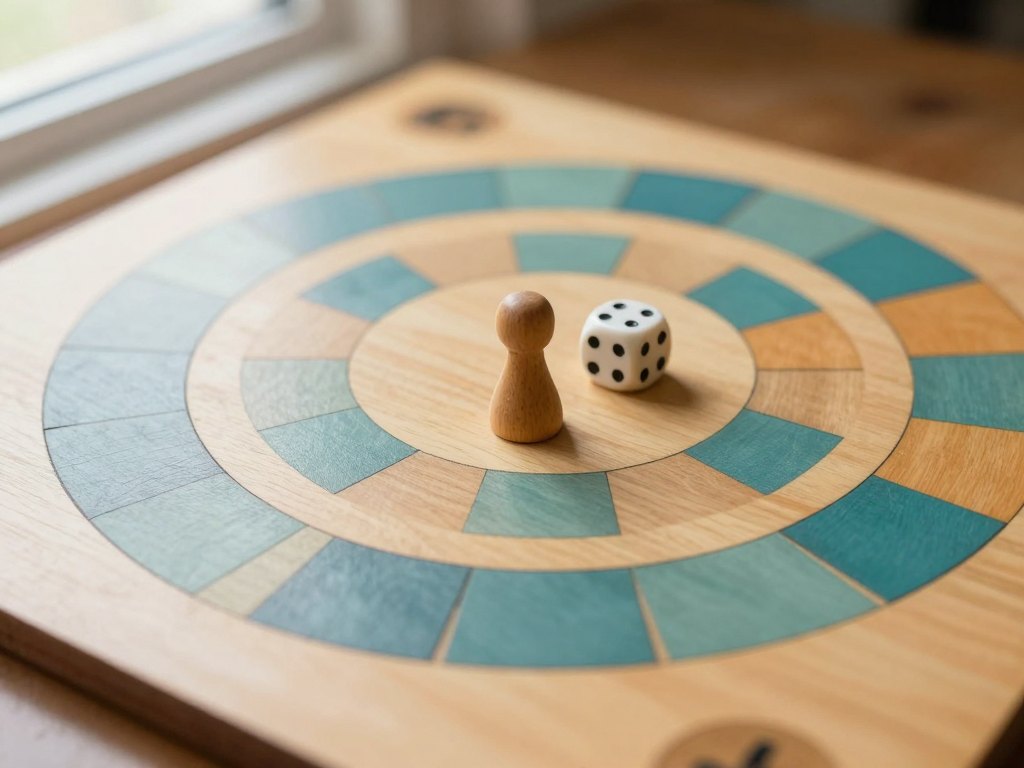
The Leela game has a structure. The board moves through levels that correspond to different areas of life, and each cell carries a state, a lesson and a trap. When you know that structure you stop guessing. You can see where a player is, what the game is asking them to notice, and which question will open the next step.
Structure alone is not enough. A facilitator also needs a particular quality of attention: calm, curious, unhurried and willing to not know. The programme trains that quality through short lessons, written reflection and recorded examples of real game situations. You learn to notice your own urge to perform, fix or impress, and to return to the player's process.
The two halves are studied together. Each module pairs the meaning of the board with a facilitator skill, so you are not collecting facts in one pile and techniques in another. You build a practice that is both grounded and flexible.
- Study the board level by level, from the earthly to the cosmic
- Work with recorded case studies of real game moments
- Build session scripts you can adapt rather than recite
- Use self-review to separate your story from the player's
- Practise short meditations for entering and leaving the game
How the course works
The programme is delivered as recorded video lessons and written materials. Lessons are short, most of them under thirty minutes, so you can study one idea, try the related practice and let it settle before moving on. There are eight modules and forty lessons in total, plus a workbook that stays with you.
Each module includes explanations, examples, reflection prompts and practice assignments. You will be asked to observe real conversations, write about your own triggers, map out sessions and review recorded game situations. The workbook is where the course becomes yours: it holds your notes, your questions and your growing understanding of the board.
There are no live sessions to attend and no fixed schedule. You can start today, pause when life is busy and return whenever you need. The material remains available after purchase, so you can revisit a module before a session or use the lessons as a reference while you build experience.
This is a self-study programme. It gives you the knowledge and the practice structure; the confidence comes from applying it. The course does not promise personal supervision or one-to-one attention, but it does give you a clear path to follow on your own.
The programme
Eight modules take you from a first look at the board to a complete facilitator practice.
1Module 1 — How the Leela Game WorksSee the board as a whole and understand what a facilitator is there to do.5 lessons
- The board as a model of life
- The seven levels and the path to the centre
- What a facilitator does, and what a facilitator does not do
- Reading a player's request before the first roll
- The shape of a session: opening, play and closing
2Module 2 — Mechanics and RulesLearn how the game moves and where your responsibility ends.5 lessons
- The chakra system behind the board
- Numerology and the movement of players
- Snakes, ladders and unexpected transitions
- Your zone of responsibility and the player's
- Answering common rule questions with clarity
3Module 3 — Cell Meanings: The Earthly LevelWork through the first three levels and the states they describe.5 lessons
- Cells of the first level: birth, desire and illusion
- Cells of the second level: effort, attachment and loss
- Cells of the third level: duty, learning and discipline
- Researching a cell through your own experience
- Helping a player leave a lower-level loop
4Module 4 — Cell Meanings: The Personal Spiritual LevelMove into levels four to six and the inner work they ask for.5 lessons
- Cells of the fourth level: devotion and purification
- Cells of the fifth level: insight and its tests
- Cells of the sixth level: surrender and service
- How a facilitator grows through the middle levels
- Recognising spiritual bypassing in a session
5Module 5 — Cell Meanings: The Cosmic LevelStudy the final levels and the purpose of the whole game.5 lessons
- Cells of the seventh level: dissolution and unity
- The final cells and the return to the centre
- Conveying the purpose of the game without preaching
- Working with a player who reaches the centre
- Closing a session so the insight can land
6Module 6 — Facilitator SkillsBuild the state, the language and the boundaries of a facilitator.5 lessons
- Entering the facilitator state before a session
- Questions that open rather than instruct
- Working with different player types and expectations
- Silence, emotion and the urge to rescue
- Boundaries, ethics and when to refer someone on
7Module 7 — Session PracticeAssemble your own session and learn from real game situations.5 lessons
- Writing your opening and closing meditations
- Helping a player find a clear request
- Integrating the game's insight into daily life
- Case studies from recorded sessions
- Reviewing your own session with the workbook
8Module 8 — Presenting Your PracticeSpeak about your work clearly and choose formats that fit you.5 lessons
- Describing your offer in plain language
- Choosing between individual and group formats
- Setting prices for different session lengths
- Showing your practice online without exaggeration
- A simple plan for your first ten sessions
What you get
Everything in the programme is yours to keep and revisit.
- 40 recorded video lessons
Short, focused explanations across eight modules.
- A printable workbook
Reflection pages, cell research sheets and session templates.
- 70+ practice prompts
Questions and exercises to use in your own sessions and self-review.
- Recorded case studies
Real game moments explained step by step.
- Session script builder
A structure for openings, requests, play and closing.
- Lifetime access
Return to any lesson before or after a session.

Is this course for you?
This course is for you if…
- People who have played the Leela game and want to guide others through it
- Psychologists, coaches and counsellors looking for a structured reflective tool
- Facilitators of other board and reflection games who want to deepen their practice
- Anyone drawn to contemplative systems and willing to study consistently on their own
Probably not a fit if…
- People looking for a fast track to a professional title or a guaranteed income
- Anyone hoping to diagnose, treat or cure a psychological or medical condition
- Readers who want live supervision or one-to-one mentoring included
- Those unwilling to keep a workbook and practise between modules
After the course
You finish with a board you can read and a session you can hold. When a player lands on a difficult cell, you will have language for it that does not sound like a lecture. When someone goes quiet or starts to cry, you will know how to stay with them instead of filling the space.
You will also have a repeatable structure: how to open, how to help shape a request, how to move through the game and how to close so the insight does not evaporate on the way home. Your workbook becomes a record of your own practice, with notes you can return to before each new session.
Some graduates go on to facilitate for friends and small groups. Others use the game inside existing work with clients, or simply as a deeper personal practice. The course does not decide that for you; it gives you the skill and the honesty to choose the format that fits.
Questions before you buy
How much time does the course take each week?
Most people study two to three lessons a week, which is roughly one to two hours including the workbook exercises. The whole programme can be completed in about eight to ten weeks at that pace, and you can go faster or slower.
Do I need to have played the Leela game before?
No. The programme starts from the structure of the board and explains it from the beginning. Having played before helps you feel the atmosphere of a session, but it is not a prerequisite.
What format are the lessons in?
Recorded video lessons, most under thirty minutes, with written summaries and workbook assignments. There are no live calls and no fixed schedule to keep.
How do I get access after payment?
You receive access to the course area as soon as the payment is confirmed, along with the workbook. You study from your own account at any time of day.
How long does the material stay available?
Access does not expire. You keep the lessons and the workbook, so you can revisit a module before a session or years later.
Is there a refund policy?
Yes. You have fourteen days from purchase to request a refund. If the programme is not what you expected, contact support and the payment is returned.
Does the course include supervision or personal mentoring?
No. This is a self-study programme built around recorded lessons and practice assignments. It gives you the method and the structure; the sessions you run afterwards are your own.
Will this qualify me to work as a therapist?
No. The course teaches facilitation of a reflective board game. It is not a clinical training and does not prepare you to diagnose or treat anyone. If a player needs professional help, the lessons explain how to refer them on.
Start learning the board this week
Eight modules, forty recorded lessons and a workbook that stays with you. Begin whenever you are ready.