Dance · All levels
Learn full choreographies at your own pace
A recorded library of 28 dance routines, broken down step by step, with mirrored video and slowed-down music so you can actually finish them.
- 28 full choreographies
- Mirrored video for every routine
- Slowed-down music tracks
- High heels tutorials included
- Self-paced, rewatch anytime
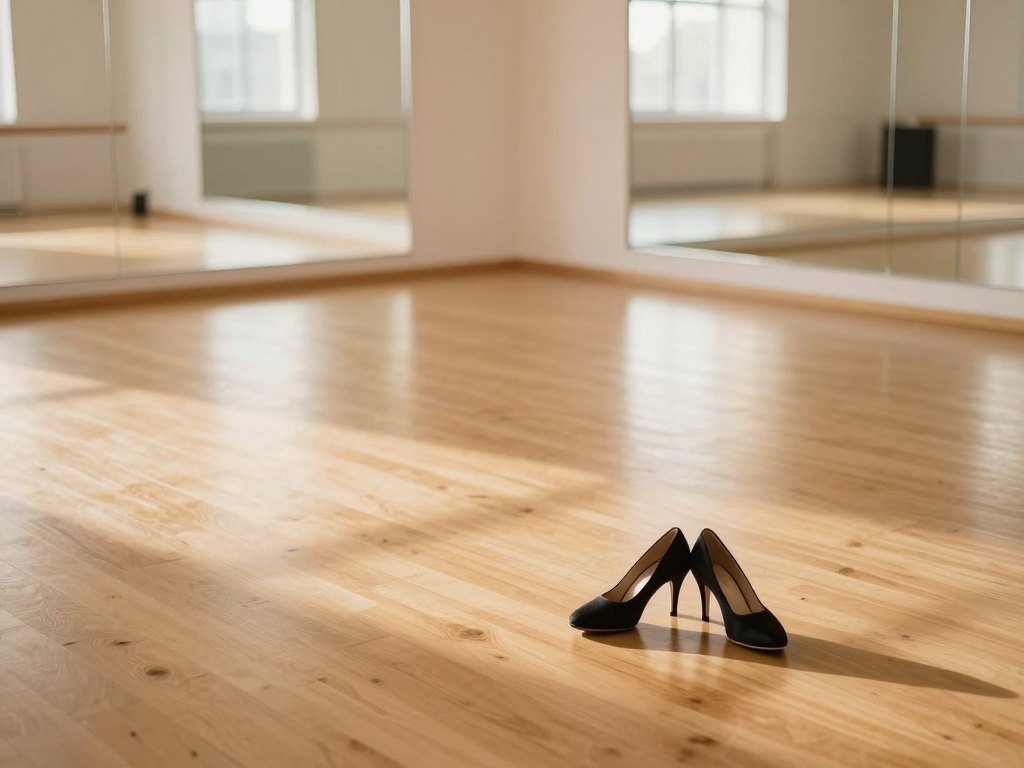
Why most dance tutorials stay unfinished
You find a routine you love, learn the first eight counts, and then the video moves on at performance speed and you lose the thread. The tab stays open for a week. You never come back to it. It is rarely a lack of talent — it is the format.
Most free tutorials show a choreography once, from a single angle, at full tempo. There is no breakdown of the arms, no explanation of where the weight goes, no slowed music to practise to. Learning a whole routine that way takes as much luck as work, and most people quietly give up halfway through the chorus.
This library is built the other way round. Every routine is taken apart slowly, filmed so that you can mirror it, and paired with a slowed version of the track. You see the count, the arms, the weight shift and the styling before you ever try it at tempo. Lessons run from 30 to 45 minutes, which is long enough to learn something real and short enough to fit into an evening.
You also do not have to guess where to start. The library is organised into packs by style and energy — from upbeat, punchy routines to slower, heavier grooves and a dedicated high heels set — so you can begin with the music that already makes you want to move.
What you will be able to do
By the end of the library you will have a repertoire, not a folder of half-learned clips.
- Learn a complete routine from first count to last
Not just the chorus: the full choreography, in order, at performance speed.
- Mirror the video without getting lost
Every routine is filmed so that left and right match your own body.
- Dance in heels with control
The high heels tutorials cover weight placement, balance and clean lines.
- Hear the music properly
Count the track, catch the accents and stop drifting a beat behind.
- Build speed gradually with slowed music
Practise at half tempo first, then step up to the original track.
- Film and review your own dancing
Use simple self-recording to spot what your body is actually doing.
- Keep a warm-up and practice habit
A repeatable session structure you can run in a small room at home.
- Perform with presence, not just correct steps
Work on delivery, gaze and attitude so the routine looks like yours.
- 28
- choreographies
- 35
- video lessons
- 16 h
- of recorded material
- 30–45 min
- per lesson
How the library works
The library is a collection of recorded video lessons, grouped into packs. Each lesson is one choreography, taught from the first count to the final pose: a detailed breakdown of the steps, the arms and the transitions, mirrored footage so you can follow along without translating left into right in your head, and a slowed version of the music for practice. Picture and sound are recorded cleanly, so you can hear the beat and see the detail.
Nothing is scheduled and nothing is live. You open the lesson when you have time, pause as often as you need, and repeat a section until it sits. Some people work through one routine a week; others learn three in a weekend and then spend a month polishing them. Both are fine — the material does not move on without you.
The packs are self-contained, so you can start anywhere in the library. If you are new to choreography, begin with a slower routine and the introductory lessons on warm-up, mirroring and practice structure. If you already dance, go straight to the pack whose music you like and treat the breakdown as a polishing tool.
The programme
Eight modules, 35 recorded lessons. Work through them in order or jump to the pack that matches your level and taste.
1Module 1 — Getting started with the librarySet up your space and learn how to use the video format properly.4 lessons · 40 min
- How the library is organised and how to choose your first routine
- A ten-minute warm-up to run before every choreography
- Using mirrored video and slowed music while you learn
- Filming yourself and reviewing your own dancing
2Module 2 — Summer pack one: six upbeat routinesFast, punchy choreographies that train timing and attack.6 lessons · 3.5 h
- Choreography: Pop!
- Choreography: Do The Most
- Choreography: Go!
- Choreography: Bruk Down
- Choreography: Body Go
- Choreography: Mi Like It
3Module 3 — Summer pack two: six routines with slower groovesHeavier, more grounded material where control matters more than speed.6 lessons · 3.5 h
- Choreography: WYFL
- Choreography: Is That You?
- Choreography: Fade
- Choreography: Woah Woah
- Choreography: Fan
- Choreography: Pineco
4Module 4 — Three single routinesStand-alone choreographies you can learn in a single session each.3 lessons · 1.5 h
- Choreography: Mang'Dakiwe
- Choreography: 444
- Choreography: A Letter to a Woman
5Module 5 — High heels tutorialsThree routines built for heels, with attention to balance and line.3 lessons · 1.5 h
- Choreography: She Said
- Choreography: Latina Foreva
- Choreography: One Dance
6Module 6 — Choreo course 3.0: six routinesA full set of contemporary club-style choreographies.6 lessons · 3.5 h
- Choreography: TGIF
- Choreography: Look Easy
- Choreography: Que Toi
- Choreography: Party Sng
- Choreography: Alright
- Choreography: Joro
7Module 7 — Choreo course 2.0, part oneFour routines that mix smooth grooves with sharp accents.4 lessons · 2.5 h
- Choreography: Nasty Girl
- Choreography: Dangerous Love
- Choreography: Candy Shop
- Choreography: Weya
8Module 8 — Choreo course 2.0, part twoThe closing routines of the set, with more styling and detail.3 lessons · 2 h
- Choreography: Signal
- Choreography: Godly
- Choreography: N'y pense plus
What you get
- 35 recorded video lessons
Every choreography taught from the first count to the last, in 30–45 minute sessions.
- Mirrored footage for each routine
Follow the screen as if you were standing next to it, with no left-right confusion.
- Slowed-down music for practice
Learn the sequence at a comfortable tempo before you take it to the original track.
- A dedicated high heels set
Three routines chosen for heel work, with attention to weight and balance.
- A warm-up and practice structure
The opening module shows you how to run a session that actually moves you forward.
- Six style-based packs in one library
Upbeat, slow groove, single routines and heels — pick by mood or by level.
- Unlimited rewatching during your access period
Repeat any lesson as many times as you need; nothing disappears mid-routine.
The method: break it down, then speed it up
Every lesson follows the same structure, and that structure is the reason people finish routines here. First you watch the choreography at performance speed so you know what you are aiming for. Then the routine is taken apart in small sections: the feet, the arms, the direction of the gaze, the moment the weight changes. Nothing is left to guesswork.
Next comes the slowed version. You run the section at a tempo where your body can actually keep up, repeat it until it stops feeling like a list of instructions, and only then return to the original track. This is how the routine becomes muscle memory rather than something you have to think your way through.
The last step is delivery. Once the steps are secure, the lessons turn to styling: where the movement comes from, how to fill the pauses, how to make the same choreography look like your own dancing rather than a copy. That is the part most tutorials skip, and it is the part that makes a routine worth performing.
Is this library for you?
This course is for you if…
- You have danced a little — in classes, at home, in a studio — and want full routines rather than isolated drills.
- You prefer learning on your own schedule instead of committing to a weekly class time.
- You want to understand how a choreography is built, not just copy the chorus.
- You are curious about dancing in heels and want a careful, controlled introduction to it.
- You already teach or perform and want a bank of routines to study and adapt.
Probably not a fit if…
- You are looking for live classes, personal corrections or a teacher watching you in real time — this is a recorded library.
- You have never moved to music before and want a structured beginner technique course from zero; the routines assume basic coordination.
- You want a stage performance or a competition preparation programme with coaching.
- You expect a fixed schedule with deadlines and group accountability.
After the library
A few weeks in, the change is usually not a single dramatic moment but a stack of small ones. You hear a track and instinctively count it. You pick up a routine from a video in an evening instead of a month. You stop apologising for the arms and start using them.
Most people finish with something more useful than a folder of saved links: a repertoire. Two or three routines they can perform at full speed, a warm-up they actually do, and a practice habit that survives a busy week. Some go back and polish the routines they rushed; others move straight to the next pack.
There is also the quieter result the lessons keep returning to — comfort in your own body on the dancefloor. Musicality, coordination and confidence are trained, not gifted, and they come from repetition with good material. That is exactly what a library of broken-down routines gives you.
Questions before you buy
How much time do I need each week?
One lesson takes 30 to 45 minutes, so a single session a week is enough to keep moving. Most people pair a lesson with two or three short practice sessions of 10–15 minutes on the sections that are still shaky. Learning one routine a week is a comfortable pace; there is no deadline.
Do I need previous dance experience?
No formal training is required, but the routines assume you can keep a basic beat and coordinate simple steps. If you are completely new, start with the introductory module and one of the slower routines, and expect the first choreography to take longer than the ones after it.
How do I get access after payment?
As soon as the payment is confirmed you receive access to the library and can open the first lesson straight away. There is nothing to install and no call to schedule — you log in and start watching.
How long do I keep access?
Your purchase opens the library for the access period shown at checkout, and within that window you can watch every lesson as many times as you like. The material stays available for the whole period, so you can work through the packs at your own pace rather than racing a countdown.
What format are the lessons in?
They are recorded video lessons of 30 to 45 minutes with clean picture and sound. Each one includes a full-speed run of the choreography, a detailed breakdown, mirrored footage and a slowed version of the music for practice.
Can I buy a single routine instead of the whole library?
This listing is for the full library, which bundles all the packs and single routines together. If you only want one style, the library is still the simpler option: you get the whole set for one price and can ignore the packs you do not need.
What do I need at home to follow along?
A space of about two by two metres, a device with a screen big enough to see the feet, and shoes appropriate to the routine — trainers for the general packs, heels for the high heels tutorials. A mirror is helpful but not required.
What is the refund policy?
You have 14 days from purchase to request a refund. If the library is not what you expected, contact support within that window and the payment is returned according to the store's refund terms.
Is there anyone checking my progress?
No. This is a self-study library: you work through the lessons independently, at your own speed, with no live sessions and no personal feedback. The lessons do include guidance on filming yourself and reviewing your own dancing, which is the most practical substitute for a teacher's eye.
Start with the routine you already love
One purchase opens the whole library — 28 choreographies, 35 lessons and the high heels set — for €49.00.