Career · Beginner
Run tractors, loaders and excavators with confidence
A self-paced programme on machine design, daily checks, site safety and maintenance — built for people starting out in machine operation.
- 27 recorded lessons
- Six structured modules
- Curator support by message
- Practice tasks and tests
- Self-paced access
Why so many operators learn by trial and error
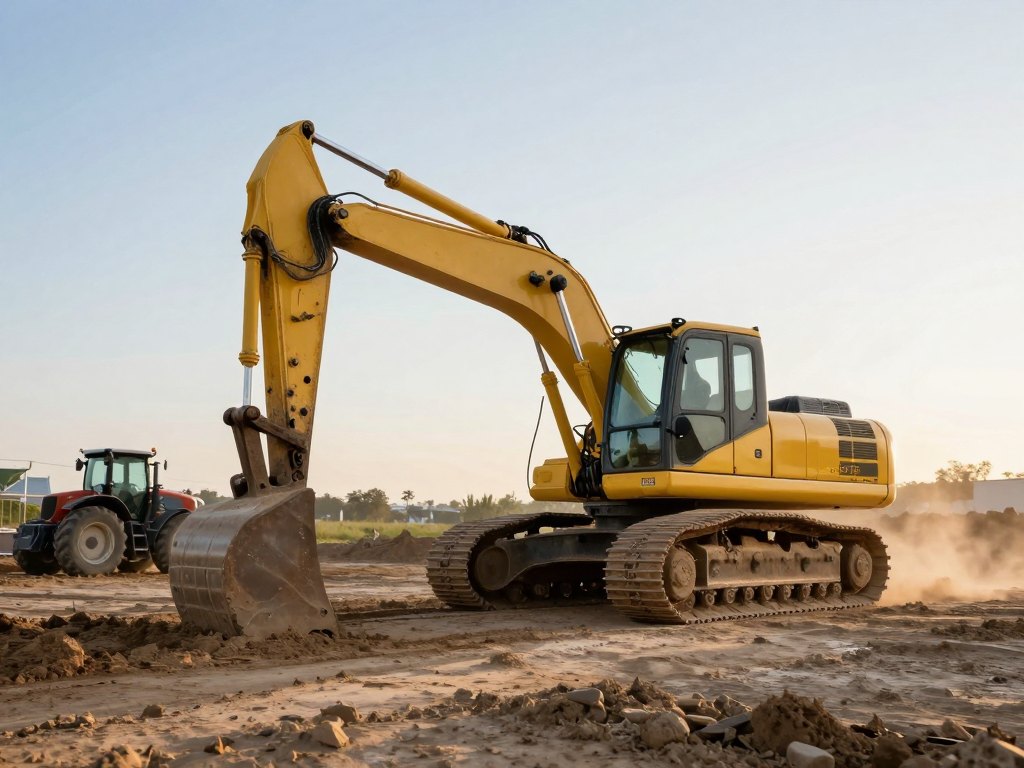
Operating a tractor, a wheel loader or a mini excavator looks simple from the outside: levers, pedals, a bucket. From the seat it is a different story. The machine is heavy, the visibility is limited, the ground changes under you, and the people around you assume you already know what you are doing.
Most newcomers learn on the job, from whoever happens to be free that day. They pick up habits — some good, many expensive. Controls get used without understanding what happens inside the hydraulic circuit. The daily check turns into a quick glance at the oil. Safety rules are memorised as phrases rather than understood as reasons.
This programme puts the missing theory underneath the practice. It explains how the main types of self-propelled machine are built, why they behave the way they do on slopes and soft ground, what a proper pre-shift inspection actually looks for, and how to keep a machine working without damaging it or the people nearby.
You work through six modules at your own pace, on a computer or a phone, and finish with a final assessment that shows whether the whole picture has come together.
What you will be able to do
By the end of the programme you should be able to explain and demonstrate each of these on paper and in practice.
- Identify the main assemblies of a machine
Engine, transmission, axles, hydraulics and cab controls — and what each one is responsible for.
- Carry out a structured pre-shift inspection
A fixed walk-around order that catches problems before the engine starts.
- Read the instrument panel and react to warnings
Know which light means stop now, which means book a service, and which means keep watching.
- Explain how a hydraulic circuit produces force
Pressure, flow, lift, tilt and breakout force in plain language.
- Match the attachment to the job
Buckets, forks, grabs and breakers, and the working positions that suit each of them.
- Work safely on slopes, in trenches and near people
Stability limits, blind spots, signalling and the situations where you stop and ask.
- Spot early signs of wear and report faults
Pins, hoses, tyres and tracks, and how to describe a fault so it gets fixed.
- Plan a simple maintenance routine
Daily, weekly and seasonal checks that fit around real working hours.
- 27
- video lessons
- 6
- structured modules
- 12
- worksheets and checklists
- 14
- days money-back guarantee
The method: understand the machine, then the task
The programme is built in a deliberate order. First you learn what the machine is made of and what each part does. Then you learn how to check it and start it safely. Only after that do you move to the work itself — digging, loading, lifting and moving material.
This sequence matters. An operator who understands that a loader tips forward because the load moves the centre of gravity will not need to memorise a list of forbidden slopes. An operator who knows what a hydraulic hose carries will not put a hand near a pressurised line. Understanding replaces guesswork, and guesswork is what causes most damage and most accidents.
Every module ends with a short knowledge check and a written exercise — a filled-in inspection sheet, a fault report, a simple work plan. These are not exams for their own sake: they are the same documents you will handle on a real site, and writing them once makes them familiar.
How the course works
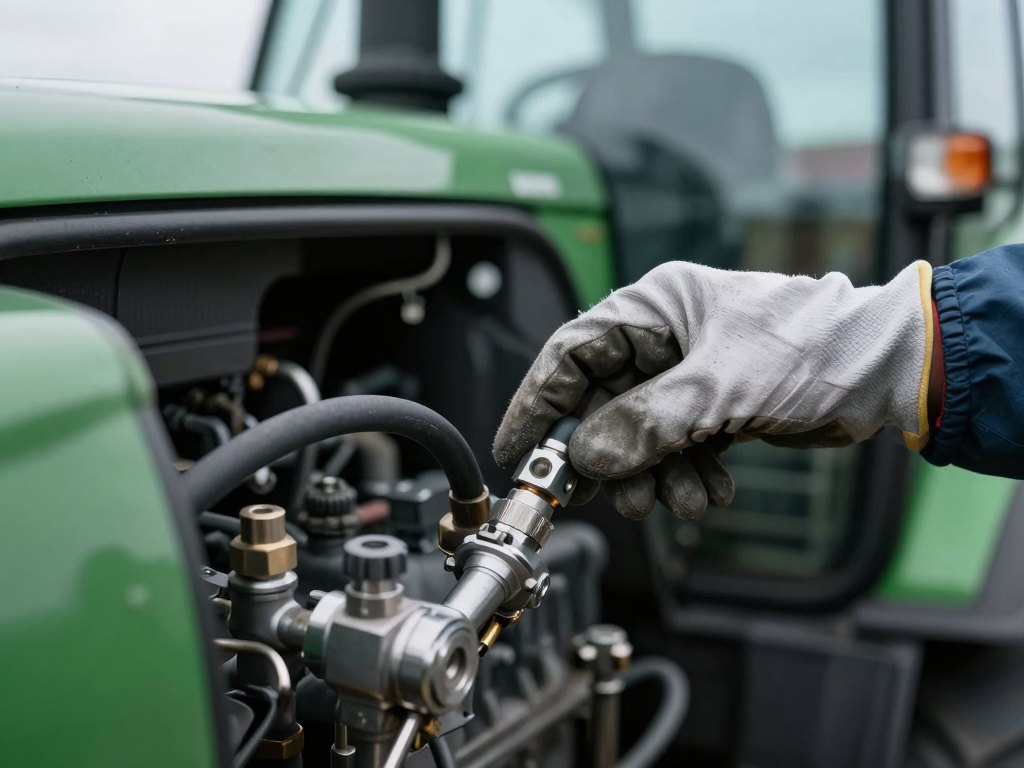
The course is asynchronous, which means there are no fixed class times. Lessons are recorded video with presentations, screen recordings and a written textbook for each module, so you can watch, pause, re-read and go back. You can study from a computer or a phone and set whatever pace suits your week — an hour in the evening, or a full module on a day off.
A curator follows your progress and answers questions in writing through the learning chat. If something in a lesson does not make sense, you ask and get an explanation; you are not left alone with a video library. Curator support covers the study material, the exercises and the assessment requirements.
After each module you take an intermediate assessment — a short test, plus a practical written task where the module calls for one. At the end of the programme there is a final assessment in the form of a written test and a scenario-based task. If the first attempt does not go well, you can take the final assessment a second time after reviewing the material.
The programme
Six modules, 27 lessons, from the anatomy of a machine to the final assessment.
1Module 1 — What a self-propelled machine isThe families of machine, their main assemblies and the operator station.4 lessons
- Machine families: tractors, loaders, excavators and the work they do
- The main assemblies and how power reaches the wheels or tracks
- Controls, pedals and the layout of the operator station
- Reading the instrument panel and warning symbols
2Module 2 — Daily inspection and safe startingA repeatable walk-around, fluid checks and the first five minutes of a shift.5 lessons
- The pre-shift walk-around in a fixed order
- Fluids, filters and levels: what to check and what to leave alone
- Tyres, tracks, pins and buckets: spotting wear before it breaks
- Cab entry, seat adjustment and mirror setup
- Start-up, warm-up and the first five minutes of work
3Module 3 — Site safety and movementStability, ground conditions, traffic rules and emergency procedures.5 lessons
- Stability, centre of gravity and the load chart
- Slopes, soft ground and the limits of the machine
- Site traffic rules, signalling and blind spots
- Working near people, trenches and overhead lines
- Emergency procedures and what to do after an incident
4Module 4 — Hydraulics and attachmentsHow pressure becomes force, and how to choose the right tool.4 lessons
- How pressure and flow create lift and breakout force
- Quick couplers, hoses and the risks of a pressurised line
- Buckets, forks, grabs and breakers: matching tool to task
- Load handling, stacking and safe transport of material
5Module 5 — Productive and precise operationDigging to grade, loading, confined spaces and the habits that cost money.4 lessons
- Digging to grade and keeping a level trench bottom
- Loading a truck without spilling or striking it
- Working in confined spaces and around structures
- Fuel use, cycle times and habits that waste both
6Module 6 — Maintenance, faults and final assessmentRoutines, fault reporting and preparation for the closing test.5 lessons
- The daily, weekly and seasonal maintenance routine
- Common faults: symptoms, causes and when to stop working
- Record keeping, handover notes and reporting
- Preparing for the final assessment
- Final assessment: written test and practical scenario

What you get
- 27 recorded video lessons
Short, focused and rewatchable, grouped into six modules.
- Presentation slides for every module
The key diagrams — hydraulic circuits, stability triangles, inspection points — as clean visuals.
- An electronic textbook and handouts
Written material to read alongside the video, with the terminology spelled out.
- Twelve worksheets and checklists
Inspection sheets, fault reports and work plans you fill in as you go.
- Intermediate assessments
A short test after each module so you know what has actually stuck.
- Curator support in writing
Questions about the material answered through the learning chat.
- A final assessment with a second attempt
A written test and a scenario task, with a retake if you need one.
- Access from computer or phone
Study at home, on a break or between shifts, at whatever pace suits you.
Built around the machines you actually meet on site
The lessons do not stay in the abstract. Every module works through situations that come up in real work: a loader that feels light at the rear when the bucket is full, a trench edge that starts to crumble, a hose that weeps at the crimp, a truck that is parked one metre too close.
Where a topic differs between machine types — tractors with trailed equipment, wheel loaders, tracked excavators — the lesson says so rather than pretending one rule covers everything. You will finish knowing which principles are universal and which depend on the machine in front of you.
The written exercises follow the same logic. You are asked to describe what you would check, in what order, and what would make you stop. That is exactly the reasoning a supervisor or an examiner wants to hear.
Is this course for you?
This course is for you if…
- People starting out in machine operation who want the theory before or alongside practical training
- Operators already working who never had a structured explanation of hydraulics, stability or maintenance
- Workers moving from one machine type to another and needing the differences spelled out
- Site supervisors and labourers who work around heavy machines and want to understand the risks
Probably not a fit if…
- Anyone looking for hands-on seat time — this is a theory and knowledge programme, not a practical driving course
- People who need an officially recognised licence or qualification to work; local rules decide that, not an online course
- Experienced operators looking for advanced production techniques or machine-specific manufacturer training
- Readers who want a quick summary; the programme takes several weeks of steady study
After the course
You finish with a mental model of the machine rather than a list of rules. When something feels wrong — a sluggish boom, an unusual noise on a slope, a bucket that will not hold its angle — you have a way to reason about it instead of guessing.
On a site, that shows up in small, visible ways. Your pre-shift inspection takes the same amount of time but actually covers everything. You can describe a fault to a mechanic in a sentence that means something. You know which loads and which ground conditions are outside the machine's limits, and you say so before starting rather than after.
And if you go on to practical training or to work under supervision, you arrive already speaking the language: assemblies, circuits, stability, grade, cycle time. That shortens the learning curve considerably.
Questions before you buy
How much time do I need each week?
Most learners spend three to five hours a week, which brings them through the six modules in roughly six weeks. There is no deadline: you can spread the programme over two months or work through it faster if you have the time.
Do I need previous experience?
No. The programme starts from the basics — what the machine is made of and what each control does — and builds up. Basic literacy and an interest in how machines work are the only real prerequisites.
Do I need my own machine to follow the lessons?
No. Everything is taught through video, presentations and written material. If you do have access to a machine, the checklists and exercises become far more useful, because you can walk around a real one while you fill them in.
How do I get access after payment?
Once your payment is confirmed, your learning account is opened and you receive your sign-in details by email. All modules, worksheets and assessments are inside the account from the first day.
What format are the lessons in?
Recorded video lessons with presentation slides and screen recordings, supported by an electronic textbook and downloadable worksheets for each module. Everything is written material you can keep and re-read, not a live broadcast.
How long does the material stay available?
Your access does not expire. You can return to any lesson, rewatch a video before a job interview or re-read a module when you meet an unfamiliar machine.
What is the refund policy?
You have 14 days from purchase to ask for a refund. Write to support, and the payment is returned in full — no explanation required.
Does this course give me a licence to operate machinery?
No. It is a study programme covering the knowledge behind machine operation. Licensing and permission to work are set by local regulators and employers, and usually require separate practical training and examination.
Can I study on a phone?
Yes. The lessons and worksheets work on a phone as well as on a computer, so you can watch a module during a break and take the module test later at a desk.
Start with module one this week
Six modules, 27 lessons and a curator to answer your questions — at your own pace, from wherever you are.