Languages · Beginner
Read Russian words through the imagery of their letters
A recorded eight-lecture course that teaches you to take a Russian word apart letter by letter and trace its meaning back to the proto-root.
- 8 recorded video lectures
- Creative exercises and word practice
- A test after every lecture
- 12 months of access
- Self-paced, no deadlines

Why a word can feel deeper than its dictionary entry
You have probably had the experience of a Russian word suddenly looking unfamiliar, as if the letters had been arranged for a reason nobody told you about. Most of us learned to read by sound alone: letter, sound, word, meaning. The shape of the letters and the order they stand in disappeared behind the meaning, and we stopped noticing them.
The Slavic bukvitsa takes the opposite route. Each letter is treated as an image first and a sound second, so a word becomes a short sequence of images that can be read as a phrase. Whether or not you accept every conclusion this method reaches, working through it changes the way you look at the language you use every day.
This course is a structured, self-paced introduction to that way of reading. Across eight recorded lectures you go through the Russian alphabet letter by letter, learn to join letter-images into meaningful statements, and then apply the same technique to the proto-roots, the old stems that many Russian words still grow from.
It is a course in a method of interpretation, not a dictionary and not a set of ready-made answers. You do the analysis yourself, lecture after lecture, until breaking a word into its letters becomes a habit rather than an exercise.
What you will be able to do
By the end of the eight lectures you will have a working technique, not a collection of somebody else's interpretations.
- Take any Russian word apart by its initial letters
Lay the letters out in order and name the image each one carries.
- Explain the deep meaning of every letter of the alphabet
Build your own reference table instead of memorising a list.
- Join letter-images into a meaningful sentence
Turn a string of images into a statement you can actually read.
- Read a word as a phrase rather than a label
Move from the everyday meaning to the reading the letters suggest.
- Recognise the proto-roots behind familiar words
See which old stems survive inside the vocabulary you use daily.
- Connect proto-roots to pre-Christian Slavic imagery
Understand how the old roots relate to the Slavic mythological world.
- Analyse a proto-root on your own and argue your reading
Work through each root with the bukvitsa and explain what you found.
- Tell a defensible reading from a guess
Notice where the letters support your interpretation and where they do not.
- 8
- recorded lectures
- 30–40 min
- per lecture
- 4
- modules
- 8
- tests, one per lecture
The method: letter, image, meaning
Bukvitsa is the name given to the old Slavic system of initial letters, in which each sign is understood as a picture before it is understood as a sound. The course starts from that idea and stays with it: before you interpret a single word, you learn to describe what each letter shows, in your own words, without borrowing a phrase from anyone else.
A word analysis then follows a fixed sequence. You write the word out, name the image of each letter in order, read the resulting sequence as a short phrase, and finally check whether that phrase fits the everyday meaning of the word. When it does, you have a reading you can explain. When it does not, you have learned something about the limits of the method, which is just as useful.
The second half of the course applies the same sequence to the proto-roots of the Russian language, the old stems that sit underneath whole families of modern words. Here the imagery reaches further, into the pre-Christian Slavic world, and each root is analysed separately so that you arrive at your own reading rather than repeating a formula.
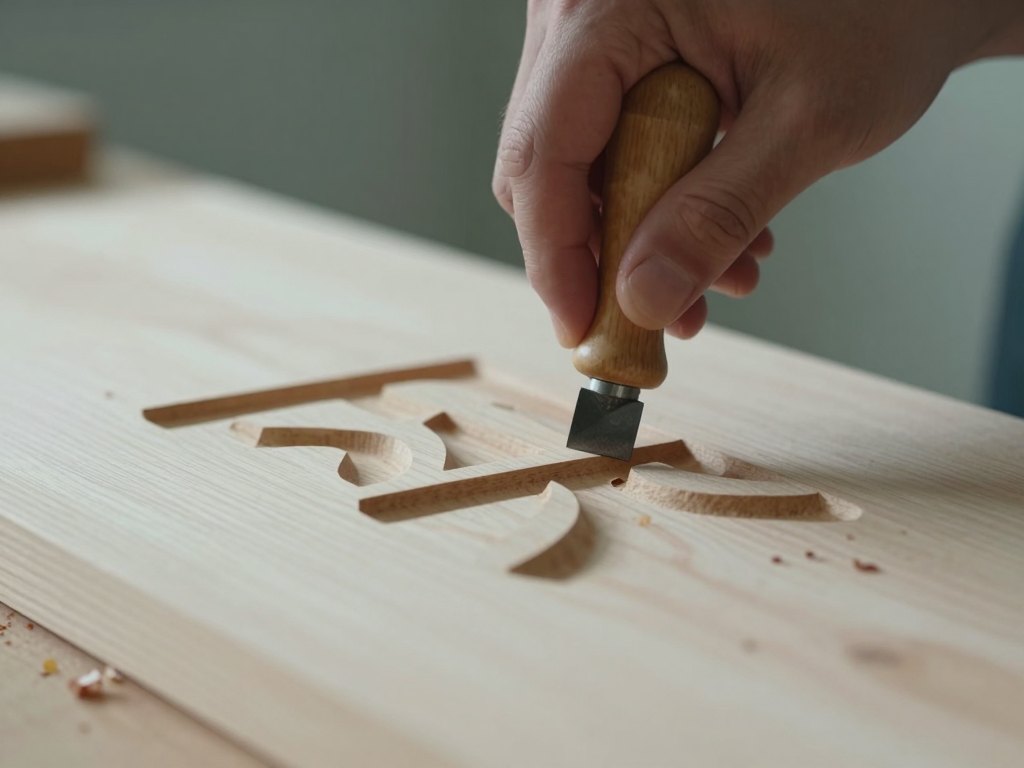
How the course works
All eight lectures are already recorded and arranged in order inside your personal account on the learning platform. Each one runs for around thirty to forty minutes. You can pause, rewind and rewatch at any time, on a computer, laptop, tablet or phone, as long as you have an internet connection.
Every lecture is followed by a short test, so you can check what actually stayed with you before moving on. Alongside the tests there are creative exercises on the Slavic bukvitsa and practice in parsing and interpreting words. These are the part of the course that turns watching into a skill, and they are worth doing with a pen in hand.
There is no tutor feedback and no schedule. You study independently, at whatever pace suits you: one lecture a week is a comfortable rhythm, and the whole programme fits into a few weeks even at a relaxed pace. Nothing expires while you work, because access runs for twelve months from the date of payment.
You do not need any software beyond a browser. Everything lives in one account, and the lessons stay where you left them, so a twenty-minute session on a phone is as valid as an evening at a desk.
The programme
Four modules, eight recorded lectures, one test after each. The order matters: each module uses the technique built in the one before it.
1Module 1 — The bukvitsa as a system of imagesWhere the initial letters come from and how to read a letter as a picture rather than a sound.2 lectures · 70 min
- Letter and sound: two different ways of reading the alphabet
- The image behind a letter: describing it in your own words
2Module 2 — The deep meaning of the Russian alphabetWorking through the letters one by one and building a reference you will use for every analysis.2 lectures · 75 min
- Vowels and the images they carry
- Consonants, their images and the pairs they form
3Module 3 — From letters to a readable phraseJoining letter-images into statements and applying the technique to whole words.2 lectures · 70 min
- Joining letter-images into a meaningful sentence
- A full word analysis, step by step, with the mistakes to avoid
4Module 4 — Proto-roots of the Russian languageThe old stems, their link to pre-Christian Slavic imagery, and your own analysis of each root.2 lectures · 75 min
- What a proto-root is and how it survives inside modern words
- Pre-Christian Slavic imagery in the proto-roots and your own reading of each root

What you get
Everything is delivered digitally inside your account, immediately after payment.
- Eight recorded video lectures
Thirty to forty minutes each, arranged in the order you should watch them.
- Creative exercises on the Slavic bukvitsa
Short written tasks that make you describe letter-images yourself.
- Word-analysis practice
Parsing and interpreting words, moving from single letters to whole phrases.
- A test after every lecture
Eight checks in total, so gaps show up before you build on them.
- Twelve months of access
Counted from the date of payment, with no need to rush.
- Lessons on any device
Computer, laptop, tablet or phone, wherever there is internet.
- A self-paced schedule
No start dates, no deadlines, no live sessions to attend.
What this course is, and what it is not
It is fair to say plainly what you are buying. This is a course in a cultural and interpretive tradition: it teaches a technique for reading Russian words through the imagery of the Slavic initial letters and through the proto-roots that sit beneath them. It is not a university course in historical or comparative linguistics, and it does not pretend to be one.
That means you will meet readings that convince you immediately and readings you want to argue with. Both reactions are useful. The course is built so that you can test each interpretation against the letters yourself, and the exercises exist precisely to make you do that rather than accept a conclusion on trust.
The material also touches on the pre-Christian Slavic mythological world, because the proto-roots are presented in that context. If that framing interests you, you will find it here in a structured form. If you are looking only for etymology as a reference science, this is not the course for you, and the audience section below says so honestly.
Is this course for you?
This course is for you if…
- You read Russian and want to look at its words from an unfamiliar angle
- You are curious about Slavic culture and pre-Christian imagery
- You work with words: writing, translating, teaching or wordplay
- You want a structured method instead of scattered articles and clips
- You are ready to do the exercises yourself, lecture after lecture
Probably not a fit if…
- You are looking for an academic course in historical or comparative linguistics
- You want a teacher to check your work: there is no tutor feedback here
- You expect a ready-made dictionary of interpretations to memorise
- You do not read Russian, since every exercise works on Russian words
- You want results without doing the practice between lectures
After the course
A word you have known all your life stops being a single block of meaning. You see the letters in order, you name what each one shows, and you read the sequence as a phrase before you decide what the word means. That small pause is the whole skill, and it stays with you.
You also finish with something tangible: your own reference of the letters and their images, written in your own words across the exercises, plus a set of proto-root analyses you carried out yourself. Those notes are worth more than any summary, because they are the version of the method you actually understand.
Finally, you learn where to stop. A good reading can be explained from the letters; a weak one cannot, and the course trains you to notice the difference. That habit is what makes the technique useful beyond the eight lectures, on any word you meet next.
Questions before you buy
How much time do I need each week?
One lecture takes thirty to forty minutes, and the test and exercise that follow add roughly the same again. One lecture a week is a comfortable pace; two a week gets you through the whole programme in about a month. There is no schedule to keep up with.
Do I need any prior knowledge?
None. The course starts from the alphabet and assumes no linguistics background. The one thing you do need is the ability to read Russian, because every exercise and every word analysis works on Russian words.
How do I get access after payment?
You place the order and pay on the checkout page. Within ten to fifteen minutes an email arrives with your login, password and instructions for your personal account on the learning platform. If it has not appeared, check your spam, promotions and notifications folders.
How long do I keep access to the material?
Access runs for twelve months from the date of payment. The lectures, exercises and tests stay in your account for that whole period, so you can return to a module months later or rewatch a lecture before starting an analysis.
What format are the lessons in?
Recorded video lectures, thirty to forty minutes each, watched inside your account. You can pause, rewind and rewatch as often as you like, on a computer, laptop, tablet or phone with an internet connection. No live sessions and no fixed times.
Is there feedback from a teacher?
No. This is a self-study programme: you work through the lectures independently and complete the test after each one. The tests give you immediate feedback on what you have understood, and the creative exercises are designed to be checked against the method itself.
What is the refund policy?
You have fourteen days from the date of purchase to ask for a refund. Write to support within that window and the payment is returned. It is a straightforward money-back guarantee, so you can start the first lectures and decide for yourself.
Do I need any special software?
No. Everything runs in a browser inside your personal account. A notebook helps, because the exercises ask you to write letter-images and word analyses out by hand, but nothing else is required.
Start reading words differently
Eight recorded lectures, eight tests and a technique you will use on every Russian word you meet afterwards. Twelve months of access, a 14-day money-back guarantee.