Music · All levels
Hear every orchestra, voice and show in a tango milonga
A recorded self-study programme that teaches you to listen to tango ensembles, follow vocal phrasing and understand how a milonga night is built.
- 6 modules, 24 lessons
- Four orchestra styles compared
- Three vocal approaches
- Three show performances analysed
- Listening maps and worksheets
- Self-paced, lifetime access
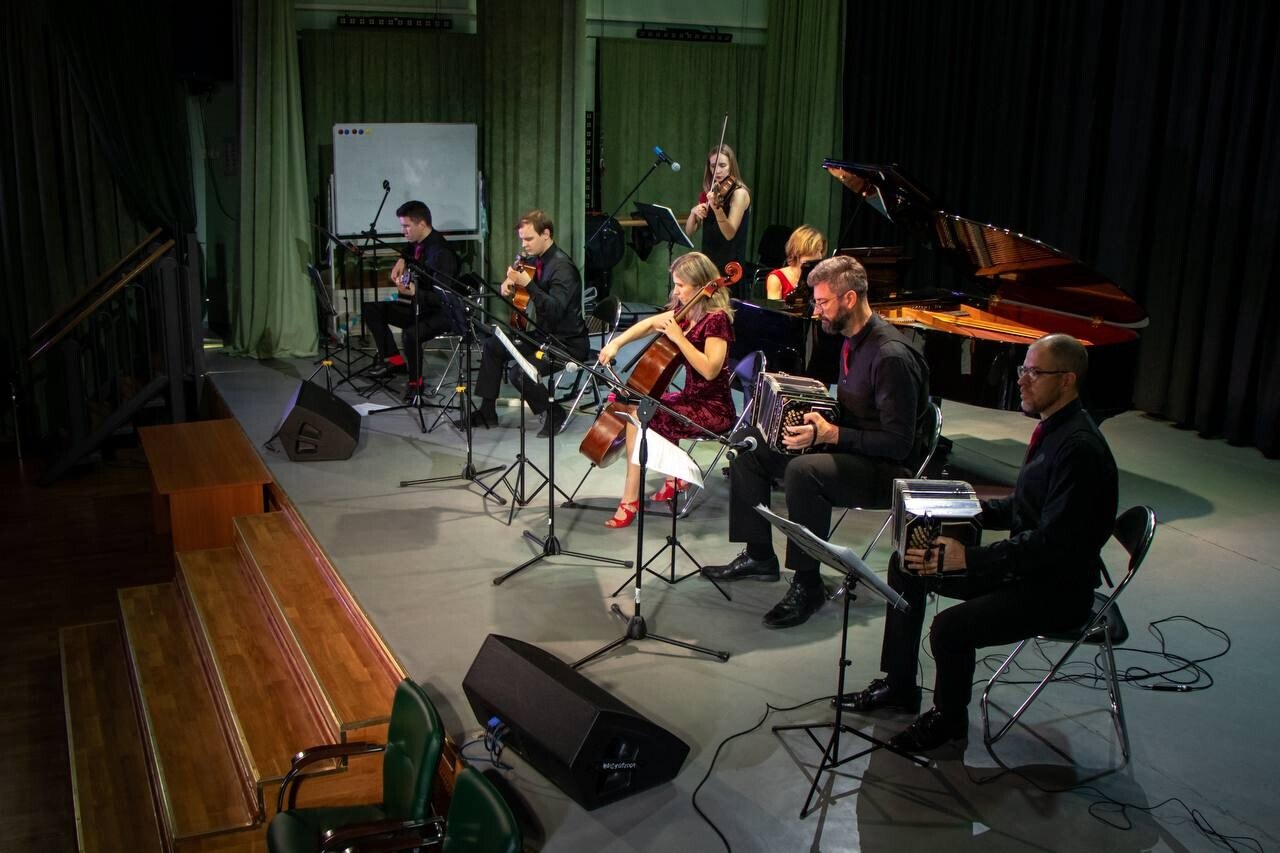
Why a milonga sounds different when you know what to listen for
You already love tango music, but a milonga can still feel like a wall of sound. One orchestra starts, the floor changes, a singer steps forward, a show begins, and by the end of the night you remember the atmosphere rather than the details. The names of the ensembles blur, the difference between a classic dance beat and a concert arrangement stays vague, and you cannot yet explain why one set made you want to dance while another made you want to sit and listen.
This programme slows that night down. It takes the structure of a four-hour orchestral milonga — four ensembles, three vocalists and three tango shows — and turns it into a guided listening course you can study at home. You learn what each part of the orchestra is doing, how a vocalist shapes a phrase, and what changes when a performance moves from the dance floor to the stage.
The aim is not to turn you into a musicologist. It is to give you a reliable way of hearing tango: a set of questions you can ask of any orchestra, a vocabulary for the layers you notice, and practice in connecting those layers to the way you dance or listen. By the end, the next milonga you attend will sound more legible, and your own practice will have a clearer musical focus.
What you will be able to do
Concrete listening skills you can use in a milonga, at home or in your own dance practice.
- Identify the role of bandoneon, violin, piano, double bass, flute and guitar
Hear which instrument carries the melody, which marks the pulse and which adds colour.
- Distinguish four orchestral approaches by rhythm, timbre and tempo
Compare a classic dance-driven sound with concert-style arrangements and newer ensemble writing.
- Follow a vocalist's phrasing and explain how lyrics shape interpretation
Notice where a singer breathes, stretches a phrase or changes the emotional weight of a line.
- Recognise what makes a tango show number different from social dance music
Understand how staging, structure and audience attention change the musical job.
- Map a milonga night by sets, energy and listening focus
Use a simple listening map to remember what happened and compare one set with another.
- Use active listening worksheets to prepare for your own practice
Turn a passive listen into notes you can take to the dance floor.
- Translate orchestral accents and pauses into movement
Connect what you hear to weight changes, timing and the way you enter a phrase.
- Build a personal listening list for training and milongas
Choose examples that train specific skills instead of relying on the same familiar tracks.
- 4
- orchestras featured
- 3
- vocalists
- 3
- tango shows
- 6
- modules
The method: listen, map, move
Every module follows the same three-step method. First you listen without trying to name everything: just notice which instrument carries the melody, where the pulse sits, and when the texture changes. Then you map what you heard on a one-page worksheet, using simple marks for accents, pauses and hand-offs between sections. Finally you move — or imagine moving — to the same passage, so the analysis returns to the body.
This is the signature exercise of the programme. It works because it separates three skills that usually happen at once in a milonga. Listening gives you raw attention. Mapping gives you memory and comparison. Moving gives you a test: if your map is right, your steps, weight changes or simply your breathing should follow the music more naturally.
- Listen once without labels
- Mark the layers on a listening map
- Compare the same passage across ensembles
- Test the map in movement or imagined movement
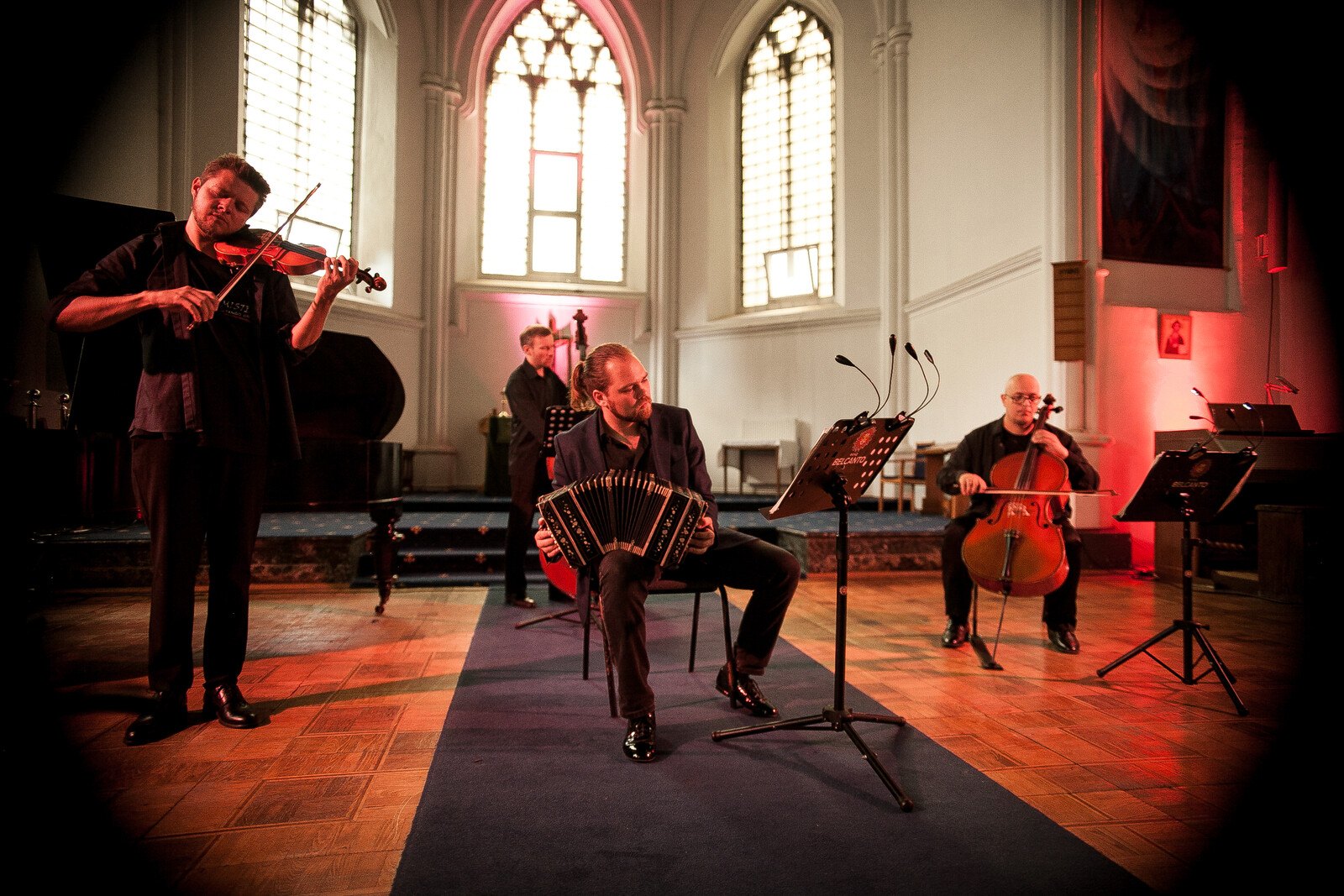
How the course works
The programme is self-paced and fully recorded. Each module opens with a short video lesson, then gives you a listening example and a worksheet to complete at your own speed. There are no scheduled sessions and no live calls; you can work through a module in one sitting or spread it across a week.
You do not need to read music. The lessons use plain language, visual listening maps and guided timings. The examples are chosen to make one point at a time: how a bandoneon enters, how a piano marks the pulse, how a singer changes the shape of a phrase, or how a show number builds an ending.
The course is designed for repeated use. You can return to a module before a milonga, use the worksheets with a different orchestra, or run the final project on a set you already know. The materials stay available after purchase, so the programme can become part of your regular listening practice.
The programme
Six modules that move from the architecture of the night to a full guided listening project.
1Module 1 — The architecture of an orchestral milongaSee how a full night is built from sets, pauses, voices and shows.4 lessons · self-paced
- What four orchestras bring to one night
- How sets, pauses and shows shape the floor
- Setting up your listening notebook
- A guided map of the full programme
2Module 2 — Inside the tango orchestraLearn the jobs of the instruments and how they hand the music to each other.4 lessons · self-paced
- Bandoneon: the breath of the ensemble
- Violin and cello: melody, counterpoint and tension
- Piano and double bass: the engine of rhythm
- Flute and guitar: colour, texture and attack
3Module 3 — Four ensemble approaches in one nightCompare dance-driven, concert-style, arranged and newer orchestral voices.4 lessons · self-paced
- Classic dance-driven style: clear beat, steady pulse
- Nuevo and concert style: colour, contrast and drama
- A young ensemble's own arrangements
- Comparing four groups: tempo, dynamics and texture
4Module 4 — The voice in tangoHear how a singer turns a line into a second melody.4 lessons · self-paced
- Phrasing: where a singer breathes and why it matters
- Lyrics as a second melody
- Three vocal colours and three ways of telling a story
- Microphone, space and intimacy in a club
5Module 5 — Tango shows and the dance floorUnderstand what changes when the same music becomes a staged performance.4 lessons · self-paced
- What makes a show number: structure and staging
- Social dance versus stage dance: same music, different job
- Watching footwork with a musician's ear
- Three show performances: a guided comparison
6Module 6 — Build your own listening practiceTurn the method into a repeatable routine you can use before any milonga.4 lessons · self-paced
- Active listening in ten-minute sessions
- Marking accents, pauses and changes of texture
- From listening map to dance practice
- Creating a personal milonga listening list
What you get
Everything is delivered in a self-paced course area and can be used repeatedly.
- 24 self-paced video lessons across six modules
- Guided listening maps for each orchestra set
- Worksheets for accents, pauses and texture
- A comparison grid for four ensemble approaches
- A vocal phrasing checklist
- A show-analysis template
- A personal listening-list builder
- Lifetime access to all materials
Is this course for you?
This course is for you if…
- You dance tango and want to hear the music more clearly.
- You listen to tango at home and want a structured way into orchestral styles.
- You are curious about the roles of bandoneon, violin, piano and double bass.
- You want to understand how vocalists and show performances fit into a milonga.
- You prefer self-paced study with worksheets and listening practice.
Probably not a fit if…
- You are looking for live dance classes or partner work.
- You want a step-by-step tango technique course.
- You expect personal feedback on your dancing.
- You want a history survey with no listening practice.
- You need a qualification or professional accreditation.
After the course
You will sit in a milonga and hear the difference between a set built on a clear dance pulse and one that leans on colour and contrast. You will notice when the piano and double bass are driving the rhythm, when the violins take over the melody, and when a bandoneon is being used for texture rather than tune. The music will still surprise you, but it will no longer feel like an undifferentiated wall.
In your own practice, you will have a way to prepare: choose a set, listen once, mark the changes, then dance or move with those marks in mind. If you are a listener rather than a dancer, you will have a vocabulary for what you love and a method for exploring new ensembles without waiting for someone else to explain them.
The programme does not promise that you will like every orchestra or every style. It gives you the tools to make those judgements for yourself, and to hear the craft inside a night that is designed to move between listening, dancing and watching.
Questions before you order
How much time do I need each week?
Most learners spend two to three hours per week: one hour of video, one hour of guided listening and short worksheet practice. The programme is self-paced, so you can go faster or slower.
Do I need music-reading or dance experience?
No. The lessons use plain language, visual maps and guided timings. A notebook and speakers or headphones are enough to begin.
How do I get access after payment?
After checkout you receive access to the course area, where all lessons and worksheets are available immediately. You can start with the first module straight away.
What is the refund policy?
If the programme is not right for you, request a refund within 14 days of purchase. We will process it according to the store's refund terms.
What format are the lessons in?
Lessons are short recorded videos with on-screen listening examples, plus downloadable worksheets, checklists and templates. There are no live sessions.
How long do I keep the material?
You keep access to the lessons and worksheets after purchase, so you can return to the programme before a milonga or whenever you want to refresh your listening skills.
Is this a recording of a live concert?
No. The programme is a teaching course built around the structure of an orchestral milonga night. It analyses orchestra styles, vocal approaches and show performances rather than replaying a full event.
Can I use the course if I am a beginner dancer?
Yes. The listening method starts from the basics of pulse, melody and texture, so no prior musical training is needed. Experienced dancers can move straight to the comparison and show modules.
Will I need any software or extra materials?
No special software. The worksheets are standard documents you can print or fill in digitally, and a simple notebook works just as well for the listening maps.
Start listening this week
Six modules, 24 recorded lessons and a repeatable listening method you can take to any milonga.