Education · All levels
Get your teenager through school without losing motivation
A recorded programme for parents and educators who want the teenage school years to cost less — and to teach something that lasts.
- 24 recorded video lessons
- 6 practical modules
- Worksheets for parents and teachers
- Lifetime access to materials
- 14-day money-back guarantee

Why the teenage years at school are the hardest
Somewhere between primary school and the final exams, the child who used to bring home drawings starts answering "fine" and closing the door. Marks slide, homework becomes a nightly negotiation, and conversations about school turn into arguments nobody wins. This is not proof that you have failed as a parent or a teacher. It is what the teenage years usually look like.
The reasons are rarely dramatic. The workload grows faster than the study habits do. Subjects become more abstract exactly when attention is pulled in a dozen directions. And the question "why should I care about this?" arrives with full force, while the old answers — because you have to, because it will be on the test, because I said so — stop working.
Most families respond by adding pressure: more control, more tutors, more reminders. Sometimes the marks recover for a term. Almost always the relationship pays for it, and the teenager learns that school is something done to them rather than something they can run themselves.
This course takes a different route. It looks at what is actually happening during the teenage school years and gives parents and educators a set of practical tools: how to keep motivation alive, how to build the study skills the new workload demands, and how to hand responsibility over gradually instead of all at once or never.
What you will be able to do
Each ability below is practised on your own situation — a child, a class or a single subject that has become a battleground.
- Explain teenage school behaviour without blaming
Read a forgotten test or a sudden refusal as information rather than defiance.
- Rebuild motivation on something sturdier than marks
Connect schoolwork to goals your teenager recognises as their own.
- Teach a workable way to plan a week
Turn a chaotic to-do list into a calendar with realistic blocks and buffers.
- Break large tasks into steps a teenager can start
Replace "do your project" with a first action that takes fifteen minutes.
- Discuss marks without a fight
Use a structure that keeps both sides talking past the first minute.
- Hand over homework gradually
Move from supervising every evening to checking in once or twice a week.
- Work with teachers instead of against them
Prepare for a parents' meeting with specific questions and a shared plan.
- Build a 30-day support plan
Leave with a written routine for your family or your classroom.
- 6
- modules
- 24
- video lessons
- 6
- reflection worksheets
- 30
- day action plan
The method: support instead of pressure
The approach behind this course comes from long practice with teenagers in ordinary schools and in programmes built around individual learning paths. Its core idea is simple: a teenager learns to study when they are treated as the person doing the studying, not as the object of someone else's plan.
That means four practical habits. Subjectivity: the teenager has a real say in what, when and how they work. Choice: even a small, genuine choice — which subject first, which format for the summary — restores a sense of ownership. Reflection: a short, regular look back at what worked and what did not, without judgement. Trial action: permission to try a method, see the result and adjust it instead of waiting to feel ready.
None of this needs a special school or an expensive tutor. It needs adults who know what to hand over, when to hand it over, and how to stay steady while the teenager practises. The lessons show that sequence step by step, with examples of what it looks like on a normal Tuesday evening.
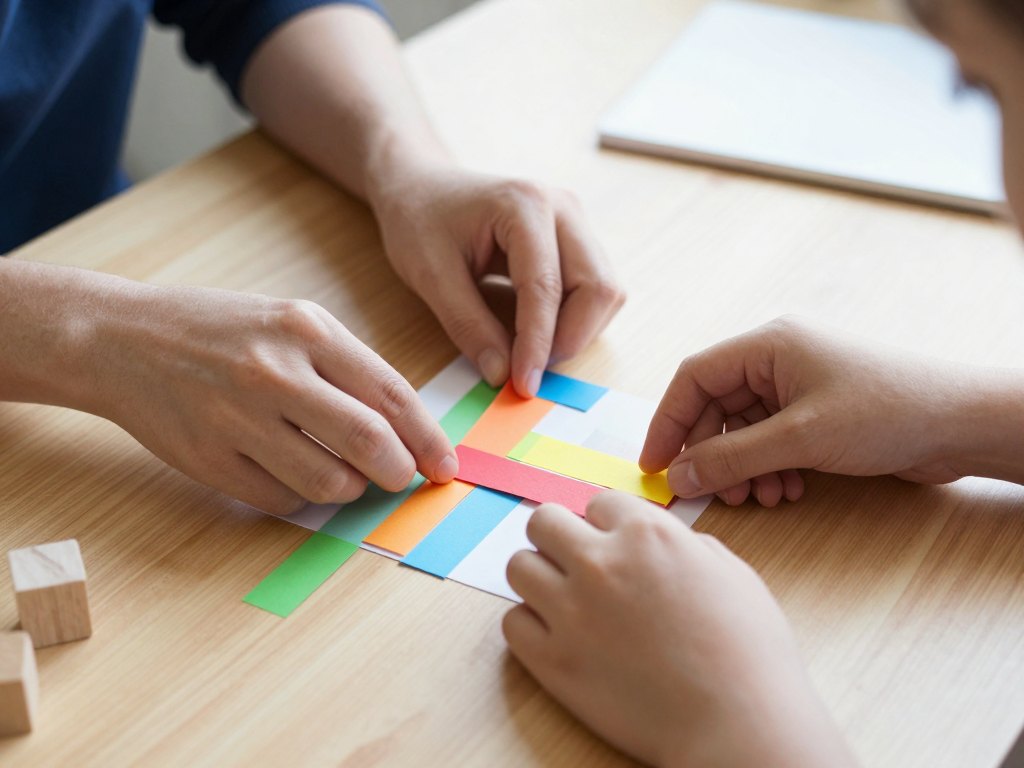
How the course works
The course is recorded and self-paced. You watch short video lessons, then apply one idea at a time to your own situation. There is no schedule to keep up with and no live sessions to attend.
Each module ends with a short worksheet: a set of questions that turns the lesson into a decision. Parents use them to review their own family routine; teachers use the same worksheets to look at a class or a single student. Most people spend two to three hours a week, and the whole programme fits comfortably into six weeks.
Materials stay available after purchase, so you can return to a module when the situation changes — before exams, at the start of a new school year, or when a conversation goes wrong and you want to try again differently.
The programme
Six modules move from understanding the teenage years to a concrete plan you can run at home or in class.
1Module 1 — What actually happens in the teenage yearsA calm look at the changes behind the behaviour.4 lessons
- How the teenage brain changes the way school feels
- Why "he just doesn't try" is almost never the whole story
- The three needs behind school behaviour: autonomy, competence, connection
- Mapping your own family's or class's school situation
2Module 2 — Motivation that does not depend on shoutingWhere motivation comes from and how to keep it alive.4 lessons
- Why rewards and threats stop working at this age
- Finding the subjects and tasks your teenager already leans toward
- Building a personal reason for schoolwork that survives a boring week
- Setting goals the teenager actually owns
3Module 3 — Learning skills for a heavier workloadThe practical study techniques teenagers are rarely taught.4 lessons
- Reading a task and breaking it into steps
- Planning a week with a real calendar, not a wish list
- Notes, summaries and how to revise without rereading
- Working with mistakes instead of hiding them
4Module 4 — Independence and responsibilityHow to hand over control without dropping it.4 lessons
- The difference between control and support
- Handing over homework without handing over the whole evening
- Agreements, boundaries and consequences that hold
- When to step in and when to let the result land
5Module 5 — Conversations that do not turn into conflictTalking about marks, exams and the future without an argument.4 lessons
- Opening a conversation about marks without a fight
- Listening for the problem behind "I hate school"
- Discussing exams, choices and the future without panic
- What to say when your teenager shuts down
6Module 6 — Building a support systemTeachers, choices and a plan you can keep.4 lessons
- Working with teachers as allies, not judges
- What to ask at a parents' meeting
- Helping a teenager choose a path: subjects, exams, next steps
- A 30-day plan for your family or classroom

What you get
- 24 recorded video lessons
Short, focused sessions you can watch in any order.
- Six reflection worksheets
One per module, for parents and for teachers.
- A 30-day support plan template
A written routine to keep after the course ends.
- A conversation outline for marks
A structure for the talk that usually goes wrong.
- A parents' meeting checklist
Questions to bring and a way to agree next steps.
- Lifetime access
Return to any module whenever the situation changes.
- 14-day money-back guarantee
Watch the first modules and decide for yourself.
Motivation is a skill, not a mood
Parents often describe motivation as something a teenager either has or lacks, like eye colour. In practice it behaves more like a skill: it grows when a task is specific, when progress is visible, and when the person doing it has some control over how it happens.
This is why the usual advice — find their passion, promise a reward, take the phone away — produces a short burst and then nothing. It works on the surface of behaviour and leaves the underlying question untouched: what is this work for, and who is deciding?
The course spends two full modules on that question. You will look at where your teenager's interests already point, how to set a goal that survives a dull week, and how to keep supporting without taking the work back into your own hands the moment it gets hard.
Is this course for you?
This course is for you if…
- Parents of children roughly 11 to 18 who want to support school without constant conflict
- Teachers, tutors and school counsellors looking for a practical framework for study skills
- Adults helping a teenager through a difficult year: a new school, a heavy exam load, a loss of interest
- Anyone who prefers concrete tools to general advice about being there for teenagers
Probably not a fit if…
- Families looking for a way to raise marks quickly without changing daily routines
- People who want a script for controlling homework and checking every task
- Those seeking clinical or diagnostic help for a teenager's mental health
- Parents of primary-school children — the material is built around the teenage years
After the course
A few weeks in, most families notice the same small shifts. Homework still happens, but the argument before it gets shorter. A missed deadline becomes a conversation about the calendar rather than a verdict about character.
Teenagers who have been given a real share of control usually start making decisions that look surprisingly sensible: which subject to start with, how much to do before a break, when to ask for help. Not every week, and not without setbacks — but often enough that the pattern begins to hold.
Teachers finish with a way to talk about study skills that does not sound like another demand, and with questions that reveal where a student is actually stuck. Parents finish with a routine they can keep and a clearer sense of what is theirs to carry and what belongs to their teenager.
Questions before you buy
How much time does the course take each week?
Most people spend two to three hours a week, including the worksheet. At that pace the six modules take about six weeks, but nothing is scheduled — you can move faster or slower.
Do I need a background in education or psychology?
No. The lessons are written for ordinary parents and for teachers who are not specialists in learning support. Every term is explained in plain language and shown on a concrete example.
Is this course for parents or for teachers?
Both. The core material is the same; the worksheets have a version for a family and a version for a class or a single student, so you can apply the ideas in either setting.
How old are the teenagers the course is about?
Roughly 11 to 18 — the years when the workload grows, subjects become more abstract and the question of why school matters appears. Parents of younger children usually find the material premature.
How do I get access after payment?
Access is sent to the email you use at checkout, usually within a few minutes. You log in to the learning platform and start with the first module whenever you like.
What format are the lessons in?
Recorded video lessons of a few minutes each, grouped into six modules, with a written worksheet at the end of every module. There are no live sessions and no fixed times.
How long do I keep the materials?
Access does not expire. You can return to any lesson or worksheet later — before exams, at the start of a new school year, or when a situation repeats and you want to handle it differently.
What is the refund policy?
You have 14 days from purchase to request a refund. Watch the first modules, try a worksheet with your family or class, and if the approach is not for you, write to support and the payment is returned.
Will this work if my teenager refuses to cooperate?
The course starts from the adult's side, which is the part you control. Many families begin by changing how they respond, and the teenager's willingness follows later rather than first.
Start before the next school week
Six modules, twenty-four lessons and a plan you can put into practice on Monday evening.